Commemorate ANZAC Day in Melbourne
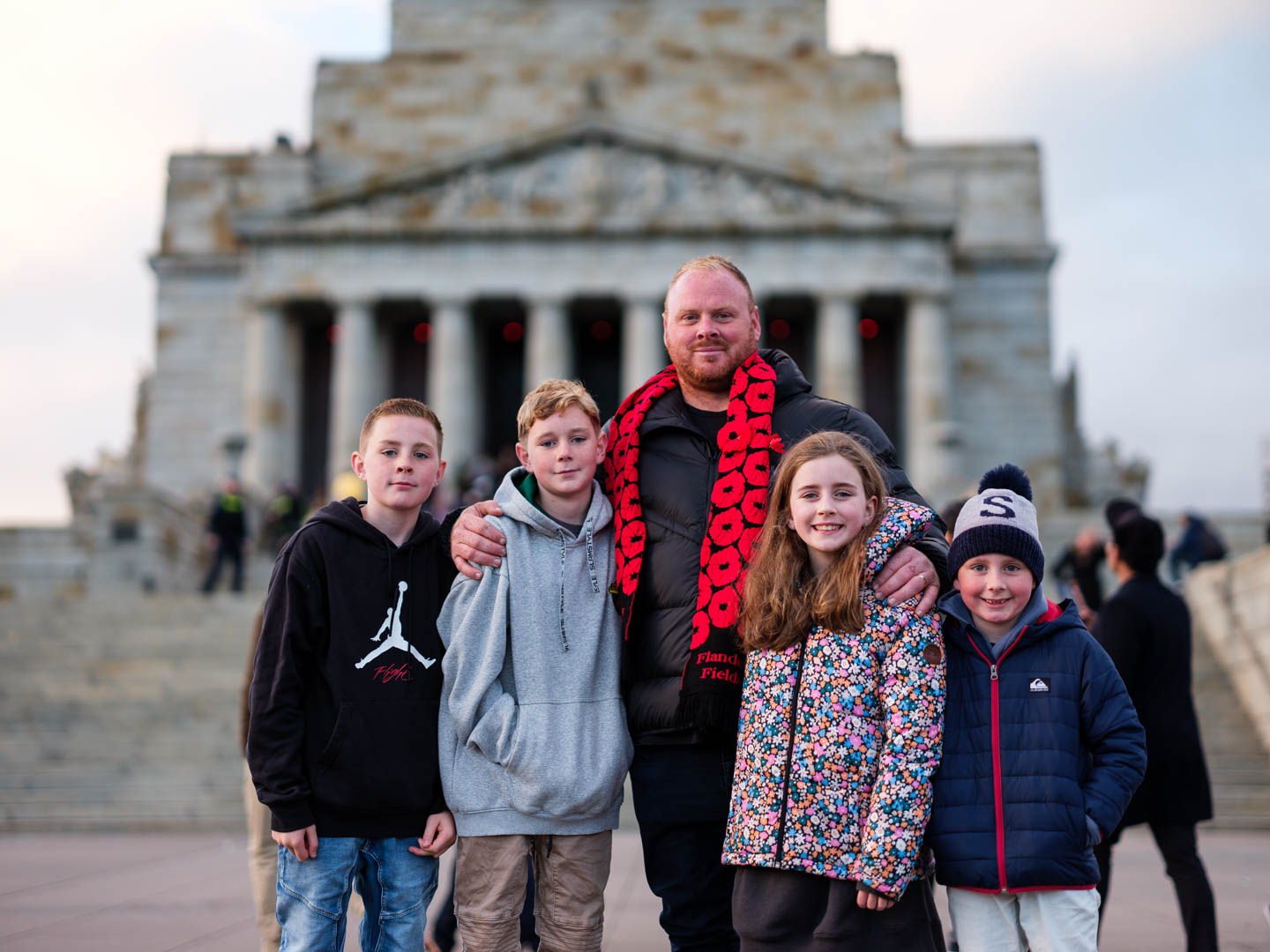
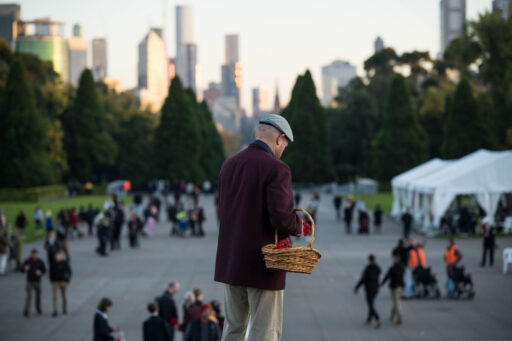
Every ANZAC Day, tens of thousands of Victorians turn out to remember the people who have served our country in all global conflicts, and honour those who continue to serve.
The significance of ANZAC Day
As the sun rose on 25 April 1915, Australian and New Zealand soldiers rowed towards the shores of Gallipoli and into history.
Every year since, Australians have gathered to remember their legacy and that of all who have followed in their footsteps.
ANZAC Day is a time to reflect, and remember the service and sacrifices of all who have served gallantly for our country. We encourage all Victorians to take time to commemorate this ANZAC Day.
Lest We Forget.
Commemorative events
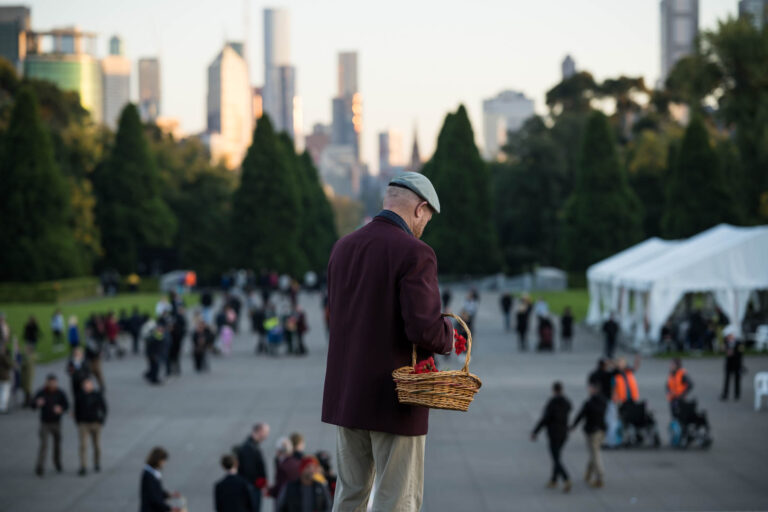
Melbourne’s ANZAC Day Commemoration activities are a way for veterans, their families, and the public to honour and recognise those who have served and currently serve for Australia.
Thank you to the thousands of RSL volunteers throughout Victoria who are so diligent in organising and conducting commemoration activities on our most important day.
Every year, the RSL Sub-Branches proudly host ANZAC Day commemorative services which are open to everyone.
Attending an ANZAC Day service provides Victorians all around the state with an opportunity to commemorate. We invite all Victorians to attend a local service and help honour those who have served, and continue to serve today.
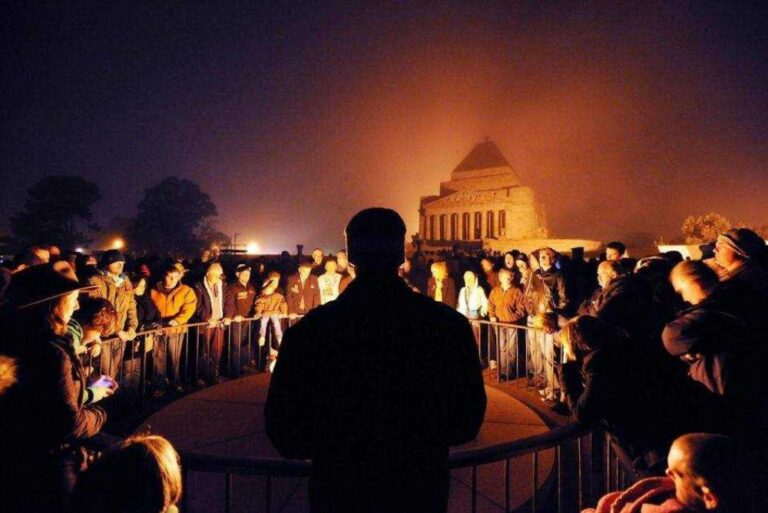
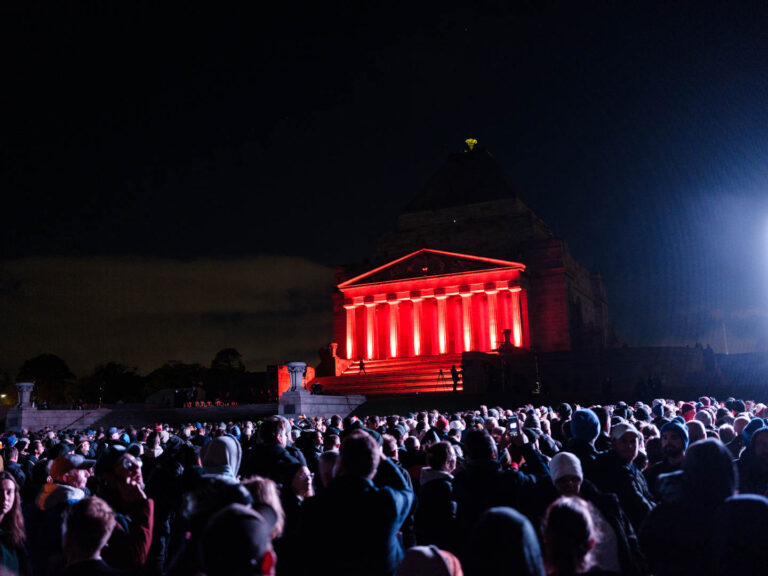
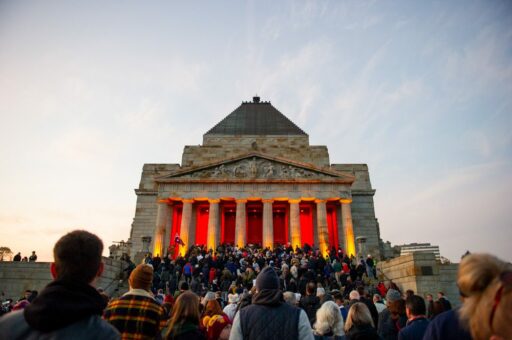
The Dawn Service is a solemn tradition, and an important way for Victorians to commemorate those who served and died in defence of our country.
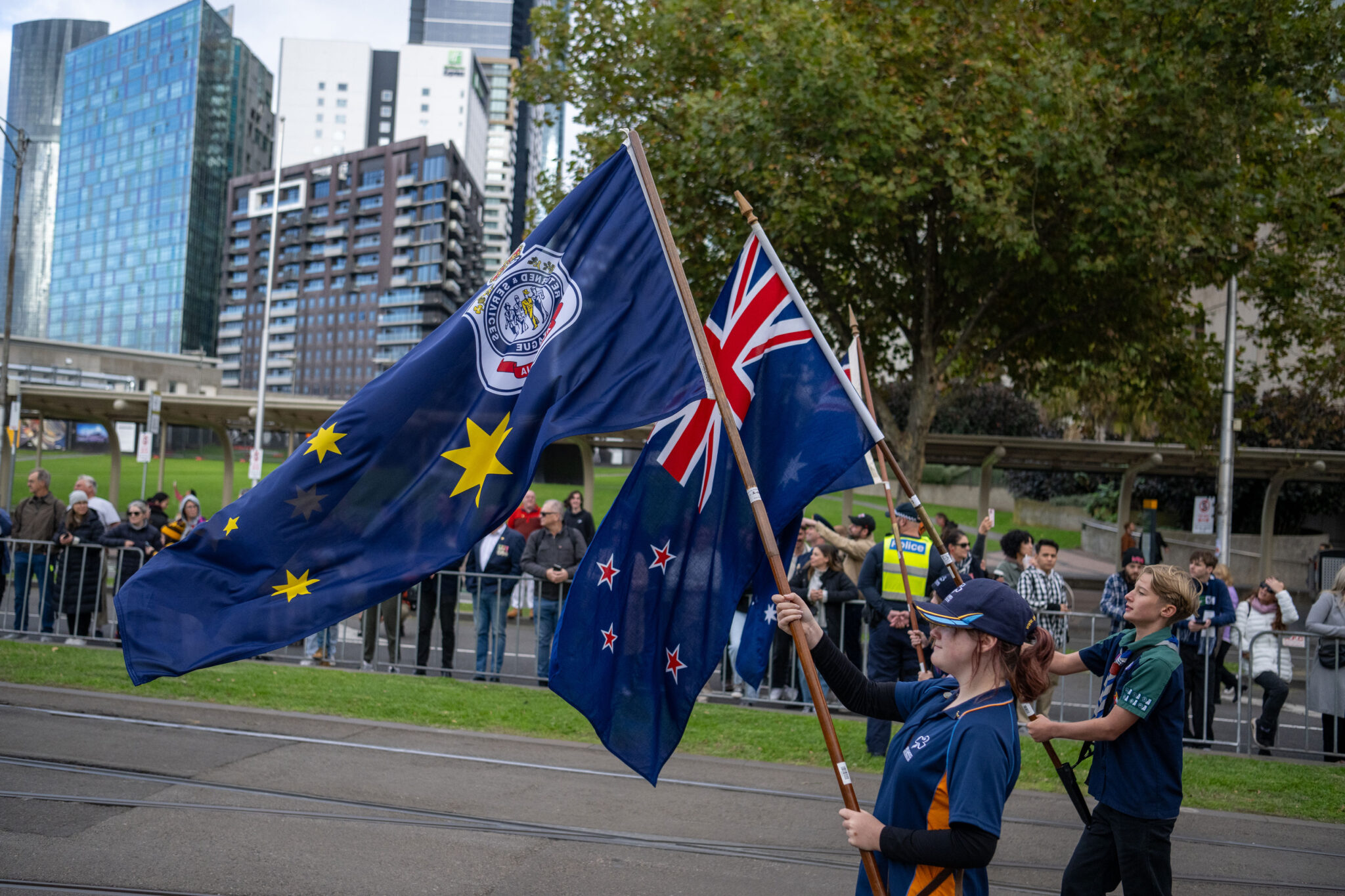
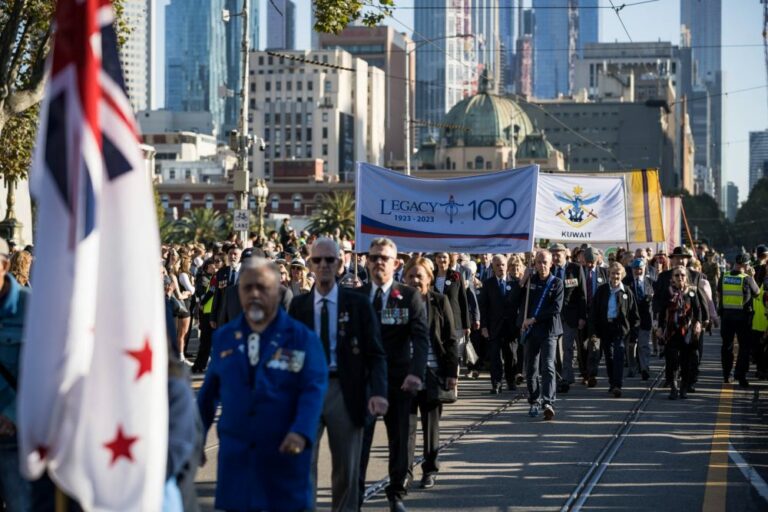
The ANZAC Day Melbourne Commemoration March is a wonderful opportunity for everyone to experience and learn about this highly significant day in Australian history and culture. Descendants of veterans are encouraged and welcome to participate in the ANZAC Day March.
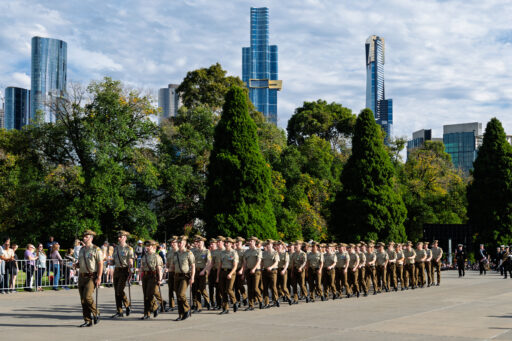
This short but deeply meaningful service takes place immediately after the conclusion of the ANZAC Day March, at approximately 12 noon, at the Shrine Forecourt at the Shrine of Remembrance.
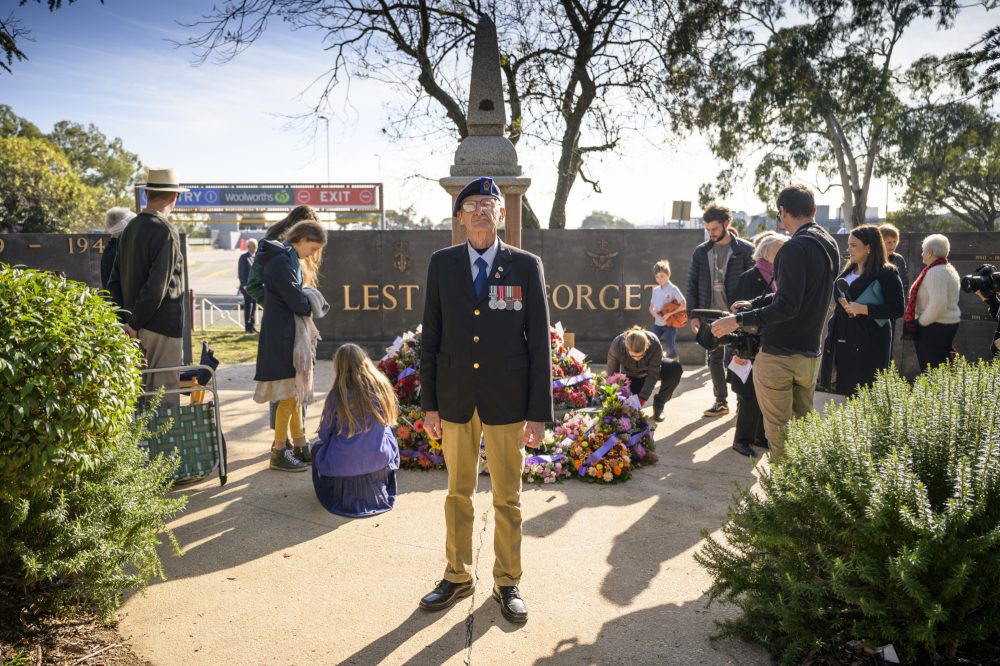
There are two parts to the ceremony during which both the official party and members of the public may lay wreaths, providing an opportunity for collective reflection and remembrance in honour of all who have served and sacrificed in the defence of Australia.
The first, formal wreath-laying is reserved for official representatives from RSL Victoria, senior Defence representatives, veteran organisations, and civic and government leaders. This is followed by an opportunity for members of the public to lay their own floral tributes.
The service concludes with the guest speaker reciting the ANZAC Requiem — a formal act of remembrance and a fitting tribute to those who made the ultimate sacrifice in the service of Australia.
Across Victoria, many other events run in commemoration of our service community. These include sporting and community events run in support of the ANZAC Appeal.
RSL Victoria will provide a livestream of both the Dawn Service and the Commemorative March for the Melbourne ANZAC Day commemorations, allowing people across Australia and overseas to take part in this year’s service of remembrance.
The Dawn Service livestream will mirror the official broadcast, while the Commemorative March livestream will place a stronger focus on the marching units themselves. This will ensure viewers hoping to see a particular unit, association, or loved one taking part in the March have the opportunity to follow the procession without missing these important moments.
🔗 The livestream will be available via the RSL Victoria Facebook page.
VISIT RSL VICTORIA’S FACEBOOK PAGE
The schedule (AEST) will be as follows:
- 5:30am to 6:30am: Dawn Service
- 9:00am to 12:00 noon: Commemorative March
- 12:00 noon to approximately 1:00pm: Wreath laying ceremony
RSL Victoria encourages those who cannot attend in person to watch the livestream and join in honouring the service and sacrifice of Australia’s veterans and serving personnel this ANZAC Day.



Frequently asked questions
Each year, our ANZAC Day event management team recieve plenty of questions. These are the most common.
Need any other questions answered?
Toilet facilities are shown on the event map.
Temporary toilet facilities (including all abilities units) are located to the east of the Forecourt and the west of the Lower Forecourt.
Permanent toilet facilities are located to the south east of the Shrine. The toilet facilities within the Shrine will be available after 7:00am.
If travelling back to the city, additional toilet facilities are located at:
- Queen Victoria Gardens (Linlithgow Avenue near St Kilda Road and the Flower Clock)
- Arts Centre Theatres Building
- Federation Square
St John’s Ambulance first aid points are located in the Shrine grounds. Their main first aid facility located to the east of the Shrine Forecourt.
Their locations will be shown on the event map. They are supported by dedicated Ambulance Victoria units.
A number of food trucks will be located on St Kilda Road near the Shrine and will be serving coffee and some food.
Free drinking water is available from a South East Water trailer that is located to the east of the Forecourt.
A safe and enjoyable ANZAC Day is RSL Victoria’s priority. Victoria Police are actively involved in the planning and management of the event and attend the event.
Dogs are generally not permitted at the ANZAC Day Dawn Service at the Shrine of Remembrance in Melbourne, with the exception of assistance dogs, such as guide dogs for people with disabilities. This is due to the large crowds, the solemn nature of the event, and safety concerns. The service involves moments of silence, military traditions, and a peaceful atmosphere, which may not be suitable for pets.
If someone has a service animal, it’s important they ensure it is properly identified to avoid any issues. However, for general attendees, it is recommended to leave pets at home.
The history behind ANZAC Day
The date of the landing at Anzac Cove on the Dardanelles Peninsula, 25 April, was chosen to be the day that would become our National Day of Commemoration.
Australian and New Zealand troops landed on 25 April 1915 where they, along with other Commonwealth Forces, held ground against almost impossible odds for the next eight months, against a Turkish force determined to defend to the death their homeland.
The British action planned to secure the heights overlooking the forts guarding the narrow straits at the entrance to the Sea of Marmora. The purpose was to silence them and allow the French and British Navy to proceed to Constantinople (now Istanbul) and by a show of force convince the Turkish Government to capitulate and to come to the side of the Allies.
The plans did not bear fruit and what ensued was a tremendous series of battles by both sides over the next eight months. Both sides suffered horrendous casualties amongst the many ravines and gullies of that rugged battleground on which the ANZAC tradition was formed and that has become the benchmark for standards of courage, mateship and determination that has set an example for all Australians to follow.
The Dawn Service on ANZAC Day has become a solemn Australian and New Zealand tradition. Australians from all walks of life participate in Dawn Services all over the globe. The Australian Defence Force, wherever possible, conducts Dawn Services even in operational areas.
The service is taken for granted as part of the Australian and New Zealand Army Corps ethos and few wonder how it all started. Its story, as it were, is buried in a small cemetery carved out of the bush some kilometres outside the northern Queensland township of Herberton.
Almost paradoxically, one grave stands out by its simplicity. It is covered by a protective white-washed concrete slab, with plain cement cross at its top end. No epitaph recalls even the name of the deceased. The inscription on the cross is a mere two words ‘A Priest’.
No person would identify the grave as that of a dedicated clergyman who created the Dawn Service, without the simple marker placed next to the grave only in recent times. It reads:
‘Adjacent to, and on the right of this marker, lies the grave of the late Reverend Arthur Ernest White, a Church of England clergyman and padre, 44th Battalion, First Australian Imperial Force. On 25th April, 1923, at Albany in Western Australia, the Reverend White led a party of friends in what was the first ever observance of a Dawn Service on ANZAC Day, thus establishing a tradition which has endured, Australia- wide ever since’
Reverend White was serving as one of the padres of the earliest ANZACs to leave Australia with the First AIF in November, 1914. The convoy of ships was assembled in Princess Royal Harbour and King George Sound at Albany. Before embarkation, at four in the morning, he conducted a service for all of the men of the battalion. When White returned to Australia in 1919, he was appointed relieving Rector of the St Johns Church in Albany. It was a strange coincidence that the starting point of the AIF convoys should now become his parish.
No doubt it must have been the memory of his first Dawn Service those years earlier and his experiences in the trenches, combined with the awesome cost of lives and injuries, which inspired him to honour, permanently the valiant men (both living and dead) who had joined the fight for the allied cause. ‘Albany” he is quoted to have said, “was the last sight of land these ANZAC troops saw after leaving Australian shores and some of them never returned. We should hold a service (here) at the first light of dawn each ANZAC Day to commemorate them”. That is how on ANZAC Day, 1923 he came to hold the first Commemorative Dawn Service.
As the sun was rising, a man in a small dinghy cast a wreath into King George’s Sound while White, with a band of about 20 men gathered around him on the summit of nearby Mount Clarence, silently watching the wreath floating out to sea. White then quietly recited the words “As the sun rises and goeth down, we will remember them”. All present were deeply moved by this service and news spread throughout the country and the various Returned Service organisations Australia-wide emulated the service.
Eventually, White was transferred from Albany to serve other congregations, the first in South Australia, then Broken Hill where he built a church, then later Forbes. In his retirement from the clergy, he moved to Herberton where he became chaplain to an Anglican convent. Soon after his arrival in Herberton (on 26 September, 1954) White died, to be buried so modestly and anonymously as ‘A Priest’.
White’s memory is honoured by a stained glass window in the All Soul’s Church at Wirrinya, a small farming community near Forbes. Members of the parish have built the church with their own hands and have put up what they refer to as ‘The Dawn Service Window’ as a tribute to White’s service to Australia.
ANZAC, originally an acronym for the Australian and New Zealand Army Corps, was used by the clerks of General Birdwood’s staff at his headquarters in Shepheard’s Hotel in Cairo, Egypt.
The word ANZAC was approved by General Birdwood as the code for the Corps when the word was proposed by a Major CM Wagstaff. It is thought the suggestion came from a Lieutenant AT White of the Royal Army Service Corps. It is recorded in the official history that “it was some time before the code word came into general use, and at the Landing (on 25 April 1915) many men in the divisions had not heard of it”. After the landing, General Birdwood gained permission to use the name for the area occupied by the Australian and New Zealand Forces.
Like the Ode of Remembrance, the ANZAC Requiem is recited at ANZAC Day services across the country. Hearing the same words each year unites communities in a shared act of national remembrance.
The ANZAC Requiem
On this day, above all days, we remember those Australian men and women who died or suffered in the great tragedy of war.
On the morning of April 25th, 1915, Australian and New Zealand troops landed under fire at Gallipoli, and it was then and in the violent campaign which followed, that the ANZAC tradition was forged. The elements of that tradition have inspired and offered an enduring example to later generations of Australians.
Each year we pay homage not only to those original ANZACs, but to all who died or were disabled in their service to this country. They enrich our nation’s history. Their hope was for the freedom of mankind and we remember with pride their courage, their compassion and their comradeship. They served on land and sea and in the air, in many places throughout the world.
Not only do we honour the memory of those Australians who have fallen in battle; we share the sorrow of those who have mourned them and of all who have been the victims of armed conflict.
On this day we remember with sympathy those Australians who have suffered as prisoners of war, and those who, because of war, have had their lives shortened or handicapped.
We recall staunch friends and allies, and especially those of the first ANZAC Day.
May we and our successors prove worthy of their sacrifice.
Presenting partners:
 |
 |
If you have any questions about ANZAC Day in Melbourne, please contact us on 03 9655 5504 or by email.