

Attend the Dawn Service in Melbourne
The Dawn Service is a solemn tradition, and an important way for Victorians to commemorate those who served and died in defence of our country.
The service is held at dawn as this is the time the ANZACs first approached the beach in Gallipoli, and faced their first bout of conflict during World War I.
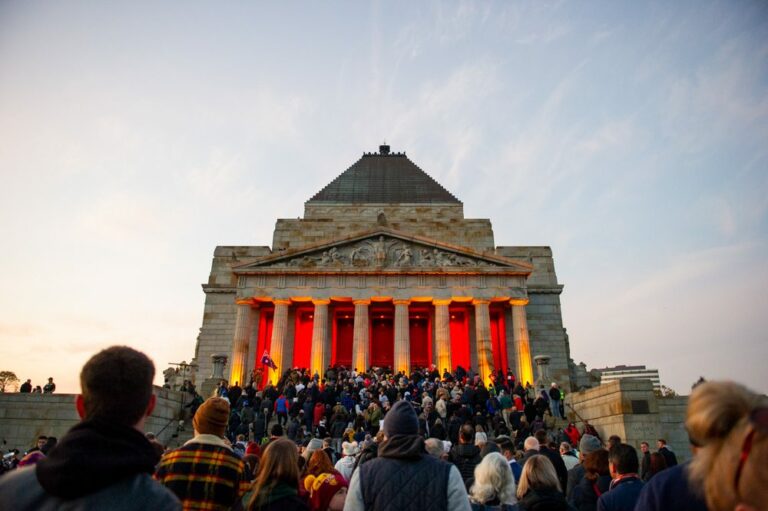
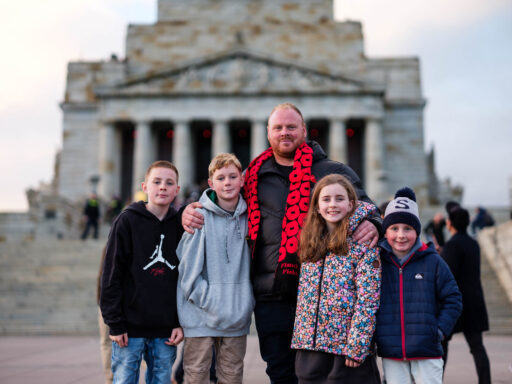
The 2026 ANZAC Day Dawn Service will commence at 5:30am at the Shrine of Remembrance.
The Dawn Service finishes around 6:30am. At the end of the service, members of the public can visit the Sanctuary of the Shrine of Remembrance to lay a poppy.
The Shrine of Remembrance opens to the public for general viewing at 7:00am.
The Dawn Service is conducted as part of Anzac Day ceremonies to honour those who have fallen in battle.
During the First World War, dawn became a favoured time for attacks. Soldiers in defensive positions were woken in the dark before dawn and took up their weapons before first light.
After the First World War, returned soldiers sought the comradeship they had felt in those quiet, peaceful moments before dawn. A dawn commemorative service — recalling the moments at dawn before battle — became an important form of commemoration in the years that followed.
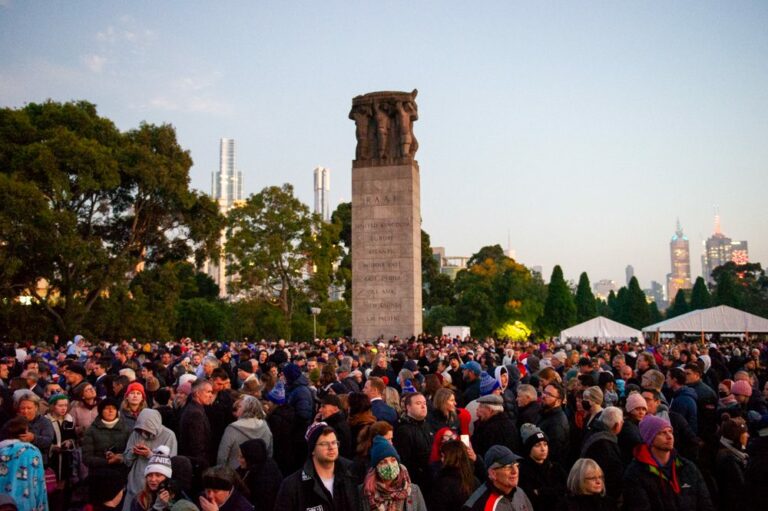
The Dawn Service happens outside and happens in all weather. It is a large crowd that gathers so you are likely to be standing for the whole service, so please dress appropriately and wear closed footware.
There will be multiple screens around the Shrine to enable participants to view the proceedings.
Preamble
The preamble is delivered by the Master of Ceremonies at the beginning of the Dawn Service. Its purpose is to provide a brief history of the Australian troops’ arrival at Gallipoli.
Stand To
The direction “stand to” in the First World War instructed soldiers to assume positions and man their weapons before an attack. It signalled readiness for battle. During the war, soldiers on active duty were woken before dawn and told to “stand to”, preparing to attack at first light. Soldiers would fix their bayonets in the dark and await their next instructions.
Long ‘G’ Sounded
The long ‘G’ is sounded on the bugle during the Dawn Service before the Ode of Remembrance and the Last Post. During the war, this note was sounded for those who had not heard the orders to “stand to”. It was a signal for troops to prepare for battle.
The Ode of Remembrance
The Ode of Remembrance has been recited to commemorate wartime service and sacrifice since 1921. It is the fourth stanza of the poem For the Fallen by Laurence Binyon, originally published in The Times on 21 September 1914. In 1919, the poem was recited during the unveiling of the London Cenotaph and has since become a central memorial tradition.
The Ode is read by the RSL State President at the Melbourne Dawn Service.
They shall grow not old,
as we that are left grow old;
Age shall not weary them,
nor the years condemn.
At the going down of the sun
and in the morning
We will remember them.
The audience responds with:
We will remember them.
Last Post
The Last Post is the bugle call that marks the end of the day’s activities. It is sounded at military funerals to signify that the soldier has gone to their final rest.
One Minute’s Silence
On the first anniversary of the First World War armistice, two minutes of silence were adopted to commemorate those who had died during the war. We now hold one minute’s silence during Anzac Day and Remembrance Day ceremonies to reflect on all those who have died in global conflicts.
Reveille
The Reveille is played to break the silence that follows the Last Post and one minute’s silence. It symbolises the awakening of the fallen into the next world. It was originally played on drums and used to wake sleeping soldiers.
Stand Down
The instruction “stand down” was given to soldiers as permission to leave their defensive positions. It signalled that they could relax from a state of readiness.
Governor of Victoria’s Anzac Day Address
The Governor’s Anzac Day Address provides a key moment of reflection and serves to unite the public in remembrance.
In Flanders Field
This poem has become a symbol of the sacrifice made by those who fought during the First World War. It was written by Canadian medical officer Lieutenant-Colonel John McCrae, who later became a casualty of the war in January 1918.
In Flanders fields the poppies blow
Between the crosses, row on row,
That mark our place; and in the sky
The larks, still bravely singing, fly
Scarce heard amid the guns below.
We are the Dead. Short days ago
We lived, felt dawn, saw sunset glow,
Loved and were loved, and now we lie,
In Flanders fields.
Take up our quarrel with the foe:
To you from failing hands we throw
The torch; be yours to hold it high.
If ye break faith with us who die
We shall not sleep, though poppies grow
In Flanders fields.
Abide With Me
The lyrics of this hymn ask for God’s guidance through life and death. It is traditionally sung at Anzac Day services in Australia and New Zealand.
National Anthems
The national anthem of New Zealand is sung in both Māori and English, followed by the Australian national anthem.
Wreath Laying by Official Party
Wreaths are laid in the Sanctuary of the Shrine at the Stone of Remembrance.
Sands of Kuwait
Sands of Kuwait is played by bagpipers at the Dawn Service. It was written for Gordon MacKenzie in memory of his colleagues who were killed in the First Gulf War.
Flowers of the Forest
Flowers of the Forest is a traditional Scottish lament — a song of mourning and remembrance. It is played to farewell the fallen at funerals and memorial services.
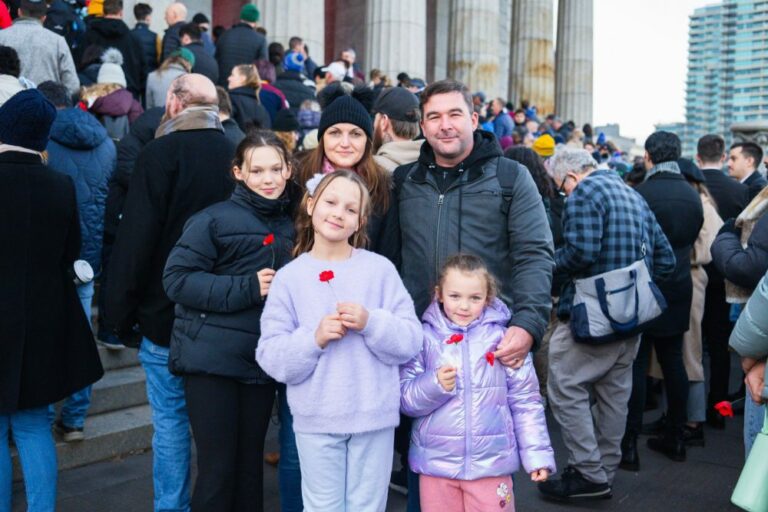
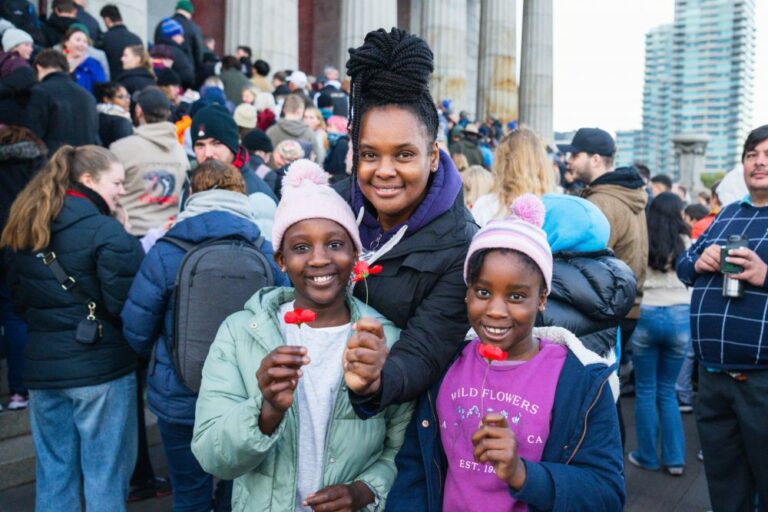
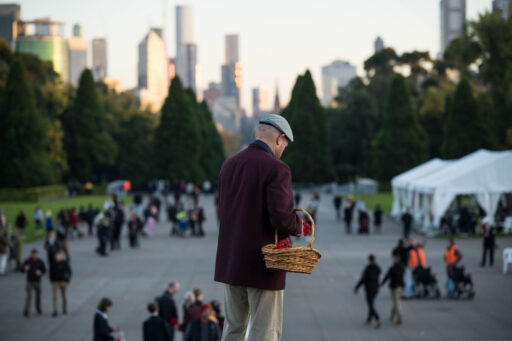
Following the Dawn Service, members of the public are invited to proceed to the Sanctuary of the Shrine to lay a poppy. The red poppy is a symbol of remembrance of those who have died in global conflicts.
They were also a symbol of hope during World War I as they were among the first plants to grow on the Western Front in Europe. They bloomed across battlefields in northern France and Belgium.
For those unable to attend the Dawn Service in person, the Service will be available online via the following:
- RSL Victoria Facebook page or website
- ABC Television provides the official live broadcast of the Dawn Service in Melbourne
- Some free-to-air television stations also broadcast from the event, and other ANZAC Day events around the nation

If you have any questions about ANZAC Day in Melbourne, please contact us on 03 9655 5504 or by email.