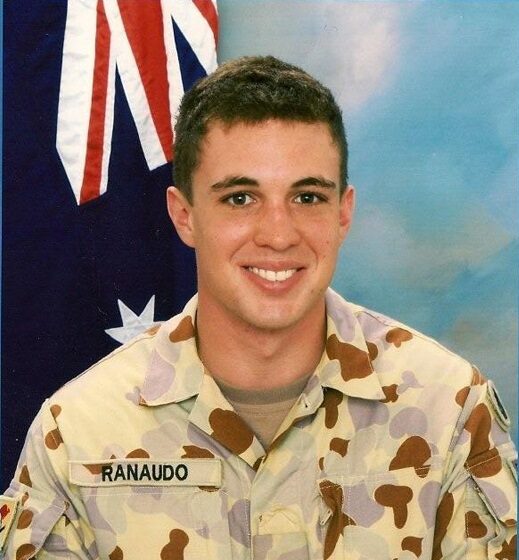
Corporal Cameron Baird VC MG – Afghanistan
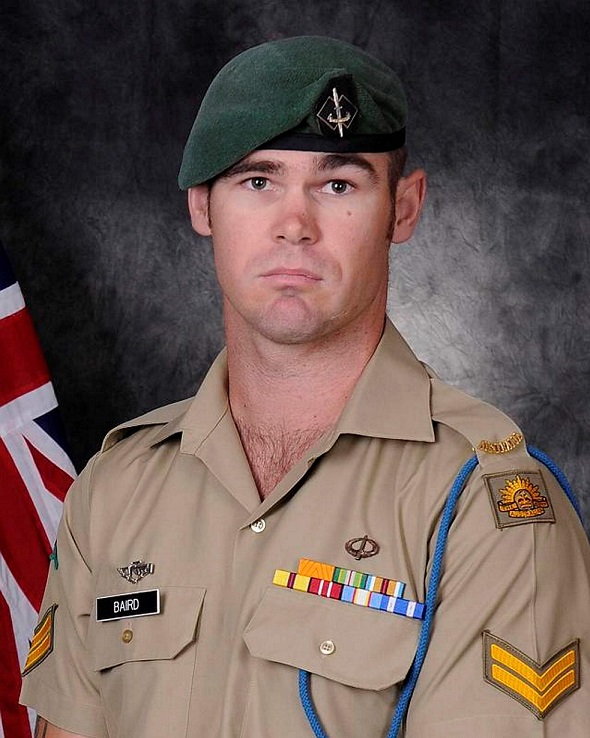
RSL Victoria remembers the sacrifice of Cameron Baird VC MG who lost his life in service of his country during operations in Afghanistan.
Cameron Baird was born in 1981 to Kaye and Doug Baird in Burnie, Tasmania.
His father was a footballer who had previously played with Carlton Football Club during the 1969 and 70 VFL seasons before continuing his football career in Tasmania where he would play for the Cooee Bulldogs and later became the captain/coach of Ulverstone.
When Cameron was about two and a half years old, and his father’s football career was coming to an end, he and his family moved back to Victoria.
Growing up Cameron lived in the northern suburbs of Melbourne where he and his older brother, Brendan, attended Gladstone Views Primary School and Secondary College.
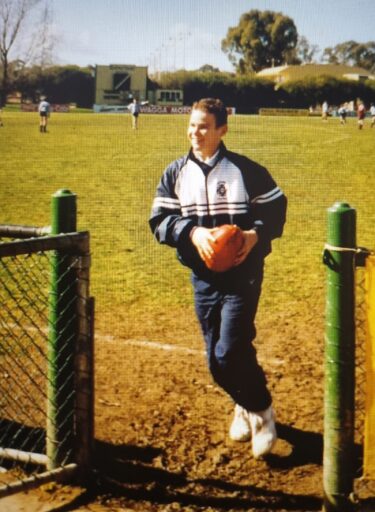
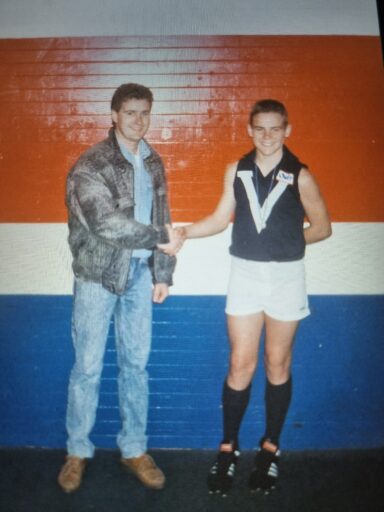
It was clear from an early age that Cameron was a skilled athlete, following his father’s passion for Australian Rules football.
He seemed destined for a career as an AFL footballer when he was made captain of the Victorian Schoolboys’ Team and won best and fairest awards at all junior levels.
Cameron put his heart and soul into his sport, refusing to drink alcohol with his friends because of the impact it might have on his development as an athlete.
Cameron’s dedication took him to the Calder Cannon’s in the under 18’s league and one match with Geelong as he prepared to nominate for the AFL national draft.
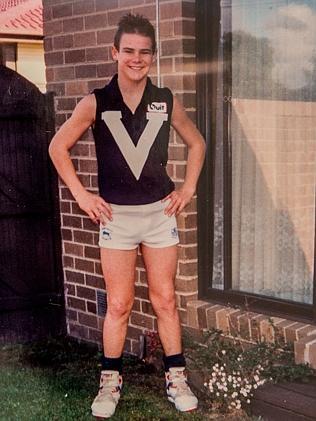
Cruelly he suffered a shoulder injury in 1999 which required surgery and he was passed over in the draft. Cameron had dedicated his life to football for more than six years and now found himself having to wait another year for selection.
Disappointed, Cameron took a trip into the heart of Melbourne as he considered his next steps. He came across an Australian Army recruiting centre where he spoke to a recruiter and in the process found a new calling where his athleticism and sense of duty would be paramount.
Cameron attempted to enlist but failed his initial medical screening. The doctor examining him found him not medically fit for service because of his injured shoulder.
Cameron’s father Doug Baird said that it was not in his nature to give in, he would follow through and find a way when he believed in something enough.
Cameron got specialist medical tests and made a submission to the Army to overrule the opinion of the first doctor.
He was told to present himself to the Army and pass further fitness tests. He was accepted into the Army in January 2000 aged 18.
Cameron joined 4RAR and was deployed to East Timor in April 2001 and then Iraq in 2003.
Corporal Baird was determined to be the best soldier he could be, completing 150 courses and undertaking commando training, qualifying for his green beret.
Cameron did not find his experience met his expectations during his first deployments, the reality of his work very different from the combat role he had imagined on enlisting.
Through 2002 and early 2003 Australia prepared to join the United States led invasion of Iraq. When it became clear Australia would contribute troops, he was determined to be the first Australian soldier to set foot in Iraq.
Unfortunately, this determination led to his second serious injury. As the helicopter prepared to land it pulled up short and Cameron, to ensure he was the first to touch Iraqi soil, jumped from the helicopter early. Because of the heavy equipment he was carrying he ruptured a disc in his back which ultimately made him unfit for service.
Cameron was given the opportunity to have an operation and rest to recover his back and then return to the Army once he was fit.
He left the Army in 2004 and fully recovered his fitness and drive to be a soldier.
On his return to 4RAR he was deployed to Afghanistan where he would demonstrate his courage as a soldier.
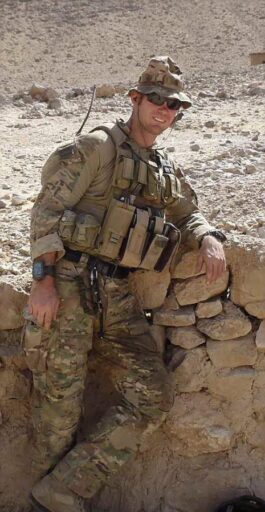
In November 2007, when his platoon became engaged in a close-range firefight with the Taliban, his friend Private Luke Worsley was mortally wounded.
Despite being under heavy fire, Corporal Baird took Private Worsley to safety and then continued the fight until the Taliban stronghold was cleared. For his “conspicuous gallantry, composure and superior leadership under fire”, Corporal Baird was awarded the Medal of Gallantry.
He returned to Australia in 2008, and his parents visited him in his barracks. His father came across a medal in a black case and asked Cameron what it was. His son told him he had been awarded the Medal of Gallantry 18 months earlier but never told his family about it.
Corporal Baird believed the medal should have been shared amongst his fellow soldiers and had only accepted it under orders.
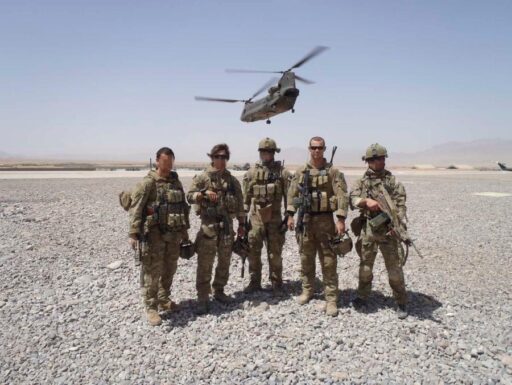
4RAR was renamed 2nd Command Regiment in 2009 and he completed three further tours of Afghanistan between 2009 and 2013 where he earned the unconditional respect of his fellow soldiers and was recognised as exemplifying what it meant to be a commando.
On 22nd June 2013 Corporal Baird and his fellow commandos took part in an attack on insurgents in the village of Ghawchak in Uruzgan province deep inside enemy held territory.
After landing by helicopter Corporal Baird and his team came under small-arms fire. He led his team in neutralising the enemy fire by killing six Taliban combatants.
The commander of another nearby special operations team was wounded as they came under heavy fire. Recognising the danger Corporal Baird led his team towards their position and subdued the enemy with grenades and rifle-fire. Corporal Baird drew enemy machine gun fire on himself to enable his team to close in on the target building.
He led the charge on the door of the building three times, drawing fire away from his team as he fired into the building from close range.
For his actions that day he would be awarded the Victoria Cross, his citation reading in part:
“For a third time Corporal Baird selflessly drew enemy fire from his team and assaulted the doorway. Enemy fire was seen to strike the ground and compound walls around Corporal Baird before visibility was obscured by dust and smoke. In his third attempt, the enemy was neutralised, and the advantage was regained, but Corporal Baird was killed in the effort.”
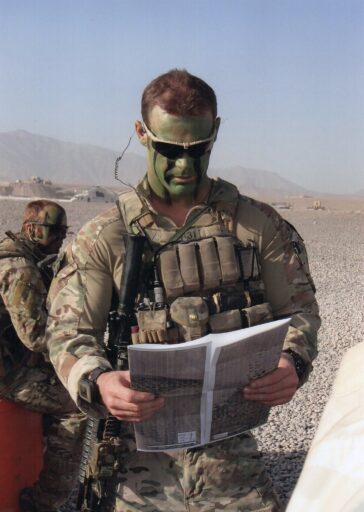
Before leaving Australia Cameron Baird told his family that “if anyone from the Army knocks on the door, but there is only person, it means I have been seriously injured. If there are three or four officers and a padre, it means I have been killed.”
When his family opened the door to three officers and a padre in 2013, they understood at once what had happened.
Corporal Baird’s Victoria Cross was posthumously presented it to his parents Doug and Kaye Baird and his brother Brendan. They made the decision to permanently loan the Victoria Cross to the Australian War Memorial because they believed it was the best way to honour his regiment and their beloved Cameron.
He was the 100th Australian to be awarded the Victoria Cross. He was 32 years old.
RSL Victoria pays tribute to Cameron Baird, his family and all those who have sacrificed in the service of their country.
Lest We Forget.