From Tarin Kowt to Dandenong, Australian Veterans and Afghan Interpreters Reunite
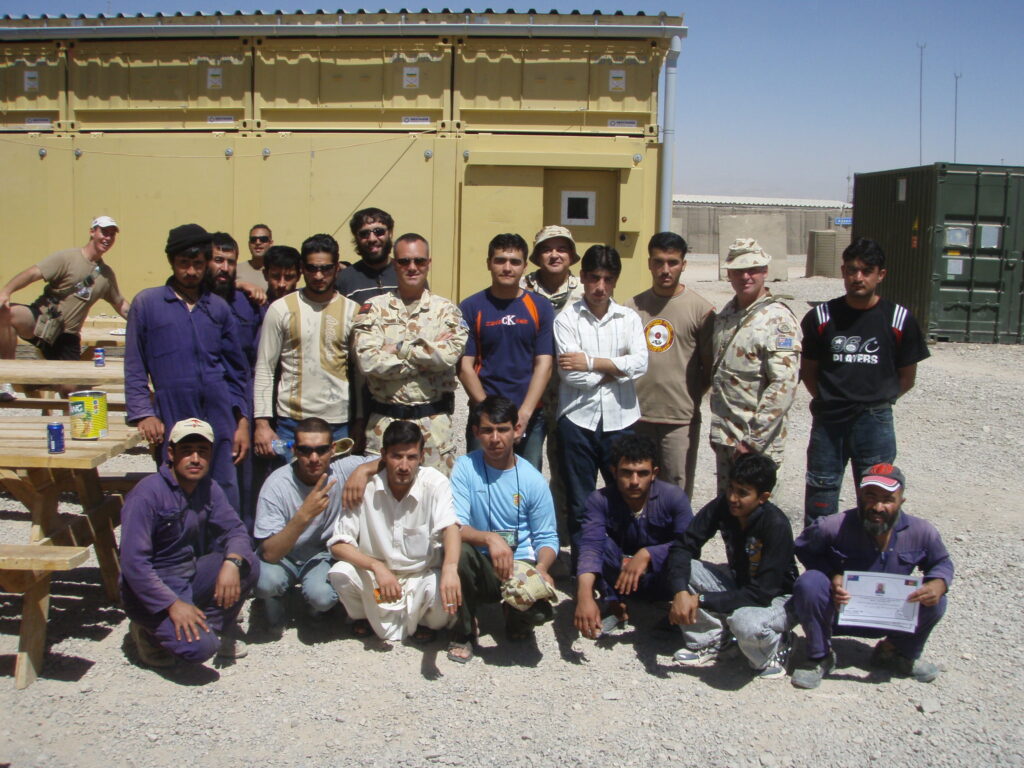
Peter Ensor had a long and distinguished career in the Royal Australian Navy. He enlisted in 1973 and finally retired in 2014, the intervening years seeing him deployed to some of the most dangerous places on earth, including Somalia and a tour of Afghanistan in 2007 as an investigator with the Australian Defence Force Investigation Service (ADFIS).
He describes ADFIS as being like the military version of NCIS. His job was everything from investigating crimes such as theft, non-combat shootings and sexual assault, to identifying Australian soldiers blown apart by Improved Explosive Devices (IED’s), and at times the enemy bombers who planted them. His job relied on local Afghan interpreters working in support of Australian operations at Tarin Kowt.

“We depended a lot on the interpreters and the ones we employed were a lot better than the Americans,” Peter said. “Ours were local and they knew the local area and the local people. The Americans were using US citizens who could speak the local language but knew very little about the country.”
One interpreter that Peter developed a close connection with was Raz Mohammad. The two met up and worked together almost every day during his nine-month stint in Afghanistan.
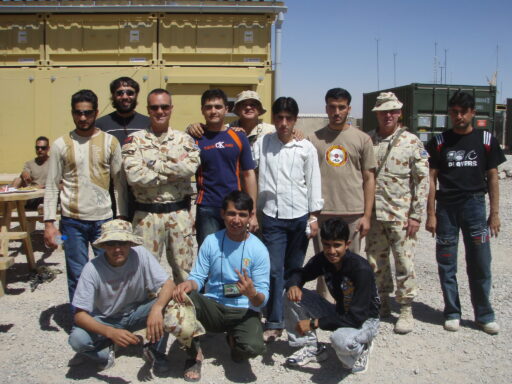
Raz was born in the city of Khost about 150 kilometres south of Kabul, but his family fled during the Soviet occupation of the country in the 1980’s and ended up in a refugee camp in Pakistan, about thirty kilometres from the border. Despite being in Pakistan, the camp was regularly bombarded by Soviet forces, so Raz and his brother fled to Dubai where he went to school.
He returned to his home county in 2006 to assist with the reconstruction of Afghanistan following the U.S led invasion in 2001.
“I went back because there was a lot of hope that Afghanistan was going to be rebuilt with new bridges, schools and roads. We had our flag and our anthem back and I wanted to be part of that and join the Afghan national army.”
Raz attempted to join a group of Afghan’s assisting the United States forces but found it was difficult to get a position without having the right connections. His brother suggested he try and help Jordanian soldiers rebuilding a hospital in Zabul province who needed an Afghan-Arabic interpreter, but when he arrived at the employment agency, IMS, the Jordanians did not come to collect him.
“IMS asked if I would like to help the Australians in Uruzgan province instead,” Raz said.
Raz went to Camp Holland where the Australian Defence Force was based base at Tarin Kowt in the Uruzgan province of Afghanistan. He was interviewed and offered a role as an interpreter.
“I was impressed with the Australians’ discipline,” Raz said. “They really looked after us, we would go on foot patrol with them, and they would have us in the middle and always be asking if we were OK. I decided I wanted to stay longer with the Australians and improve my English.”
“I remember Peter was always coming in and out of our office,” Raz said. “We worked together a lot; he was a really nice guy.”
The work Peter was doing at Tarin Kowt was never easy. One of the most difficult assignments he undertook was the identification of Australian soldier David Pearce, a 41-year-old driver with the Australian Army who was affectionately known as Poppy because of his age.
“Poppy was a good driver,” Peter said. “He tried to take a turn without reversing but hit an IED (Improvised Explosive Device). He was brought into the base with massive injuries to his head and body.”
The injuries to his head were too extensive to identify Poppy by sight alone. His medical documents were still in Australia, so the identification process was not easy. Despite pressure to complete his investigation he remained meticulous, identifying the soldier through his weapon, boots and tattoos on his body.
“I knew he had a wife and young daughters back in Australia,” Peter said, “I knew what they were going to go through, so I wanted to get it right.”
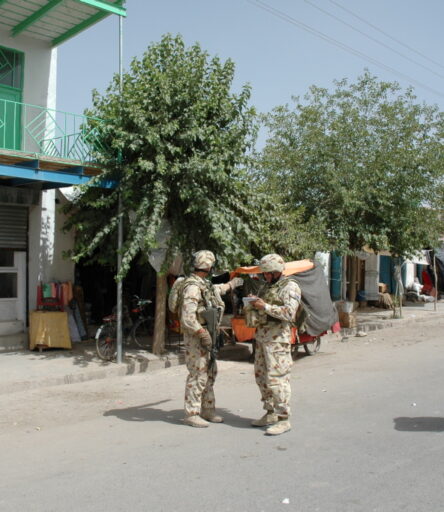
For someone whose job it was to deal with the aftermath of war, there were many moments like this for Peter Ensor. He and Raz would at times have to search for fingers in body bags to get fingerprints so they could establish the identity of victims or even the IED maker himself.
Sometimes Raz would have to step in diffuse tense situations between villages and Australian soldiers. He was awarded a Brone Commendation from the ADF for his work in mediating between the local population and the ADF.
When Peter completed his tour of Afghanistan in 2007, he returned to Australia. Despite the extreme trauma he had been exposed to Peter never received any counselling.
“I shrugged it off and told them I had not had any issues like a lot of the personnel I served with,” Peter said.
But in 2019, five years after he retired, his wife and three daughters said they thought he was changing and encouraged him to see a psychiatrist.
“I blacked out at the psychiatrist,” Peter said. “I woke up in a psychiatric ward. I don’t remember it but apparently, I wrote down what I had gone through overseas with the military. I was in the psych ward for two months.”
Peter believes he has overcome most of his demons now, thanks to the support of his family.
When Kabul fell to the Taliban in 2021 Peter’s thoughts went to the Afghans he had worked with, particular translators like Raz Mohammad and his family.
“Afghan interpreters conducted many dangerous missions with us,” Peter said. “They were our guardian angels.”
While he knew many of the interpreters had made it to Australia he did not know if Raz was amongst them.
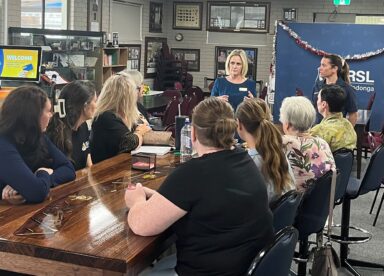
In October 2025 he was invited by his local RSL Sub-Branch, Dandenong-Cranbourne, to a dinner they had organised with the Afghan Locally Engaged Employees Association (ALLEA). The association had been formed by Afghans who had worked for the Australian forces and migrated to Australia, most settling in the southeastern suburbs of Melbourne.
Manager and Advocate at the Dandenong-Cranbourne RSL Veterans Support Service, Vladimir Nagorny, organised the event and said it was part of a push to engage with members of the Afghan community who had settled in the area. A similar event had been held the previous June for Iraqi interpreters who had served with Australian soldiers during the Iraq War.
A veteran of Afghanistan himself Vladimir is passionate about recognising the contribution locally employed people made to Australia’s mission in both Iraq and Afghanistan.
“Nisar, the President of ALEEA, got in touch with me soon after he arrived in Australia in 2014 and we have been working together ever since then.” Vlad said. “We wanted to have a dinner where we said thank you to the interpreters for the work they did with Australians in Afghanistan. Their courage, loyalty and commitment were essential to the safety of Australian soldiers often at great personal risk to themselves and their families. As a community we need to recognise their service”
“We were very happy to be invited to the dinner by the RSL,” Nisar Ahmad said. “We wanted to be involved with our mates from the Australian Army because they had done so much for us. We really feel a part of the Australian Defence Force.”
As soon as Peter arrived at the dinner, he approached Nisar Ahmad and asked if he had any word of what happened to Raz Mohammad.
“Nisar smiled at me and said, ‘he’s at the end of the table,’” Peter said.
Peter was reunited with his interpreter from Tarin Kowt after 18 years apart and on the other side of the world.
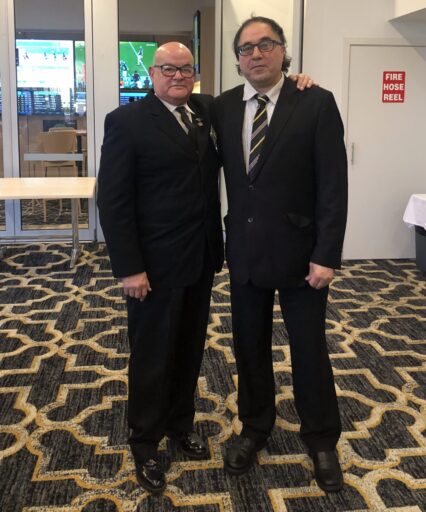
“It was a big shock seeing Peter again,” Raz said. “I had my old friend with me again after so many years.”
Raz had remained working with the Australian forces to 2013.
“Towards the end there was a lot of stories about people serving with foreign forces getting kidnapped and killed,” Raz said. “Close friends of mine were killed while travelling home from work.”
Raz remembers an Australian general visiting Tarin Kowt in 2013 and meeting with the interpreters.
“We told him about our safety fears, and he said he would raise our concerns with his superiors and the government. A few months later he emailed us and said the matter had gone to the Parliament.”
In 2013 the Australian Immigration Department arrived at Tarin Kowt and told Raz and the other interpreters that they would be given Visas allowing them to live in Australia.
Around 500 Afghans, made up of workers and their immediate families left Afghanistan for Australia in the following months.
When Kabul fell to the Taliban in 2021 many of the interpreters still had family in Afghanistan who were now considered the enemy by the new regime. Those who fled to Pakistan were in danger of being forced to return home where they faced persecution and death.
Nisar Ahmad has been working on getting the family of interpreters out of danger ever since he arrived in Australia in 2014. He has assisted hundreds of family members get to Australia, but many more remain in danger, including Raz Mohammad’s sister-in-law.
The plight of the Afghans left behind is close to the heart of Peter Ensor. In 2021 an Afghan tradesman was working at Peter’s house installing blinds. Peter asked him where he was from and the tradesman told him he had fled Afghanistan, but his sister was still in Pakistan. Peter offered to write a letter in support of the tradesman’s sister application to come to Australia. The tradesman gratefully accepted the offer and in 2024 he was finally reunited with his sister in Australia.
So, when Raz told Peter about his sister-in-law stranded in Pakistan he immediately offered to help. Peter has written a letter to the federal government detailing the work that Raz did with him in Afghanistan and urging them to grant a visa to his sister-in-law. He has now written six letters in support of the families of Afghan interpreters, always remembering the service they gave to Australia at great personal risk to themselves and their loved ones.
For Nisar and Vlad from the type of connection Peter and Raz made at the dinner is what the event was all about.
“We plan on doing a lot more activities together,” Vlad said. “We are already planning another lunch and some kind of sports day, probably a soccer match. We see the Afghan interpreters as our fellow veterans and hope that they can become part of the RSL family.”