Pilot Officer Kenneth Kinross – Second World War
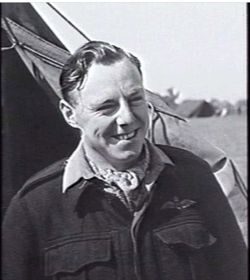
RSL Victoria remembers the sacrifice of Pilot Officer Kenneth Kinross who gave his life in service of his country during the Second World War.
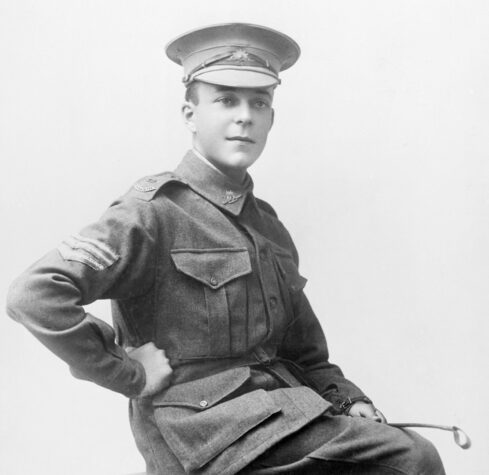
Kenneth Kinross was the son of Charles and Margaret Kinross. His father was a coppersmith and a veteran of the First World War who had served with the Australian Flying Corps as a mechanic.
Charles Kinross returned to Australia in 1919 the war and married Margaret before they welcomed their only child Kenneth on 25 September 1921 and settled in Essendon after taking out a war service loan.
Kenneth attended Raleigh Street State School and then Essendon High before getting work as an accountant at the Perpetual Executors and Trustees Association.
He was a keen tennis player, but any sporting career was cut short when in 1940 he followed in his father’s footsteps an enlisted in the Royal Australian Air Force. At only 19 years of age, he served in Australia through 1941 before embarking for flight training in Rhodesia (now Zimbabwe) and then on to South Africa and finally Britain.
He was awarded his flying badge in July 1942. In August 1943 he was assigned to No 453 Squadron where he flew Spitfires in defensive air patrols around Britain and provided escort for bombers attacking targets over Nazi occupied Europe.
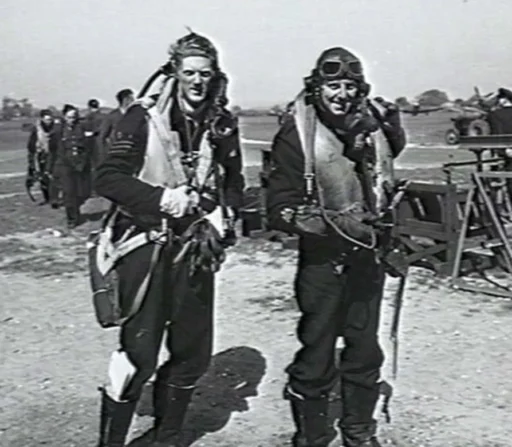
By early June the allies were preparing to create a second front in the war by invading France from both the sea and air across the English Channel. The operation was given the name Overlord but would be remembered in history as D-Day.
No 453 Squadron was assigned to take part in the invasion, waking before dawn on 6 June 1944 and flying over the English Channel above the invasion force which their commanding officer, Donald Smith, described as “the greatest convoy the world has ever seen.”
Pilot Officer Kinross was by now one of the most experienced pilots in his squadron. Throughout D-Day he provided low-level cover for the soldiers storming the beaches of Normandy.
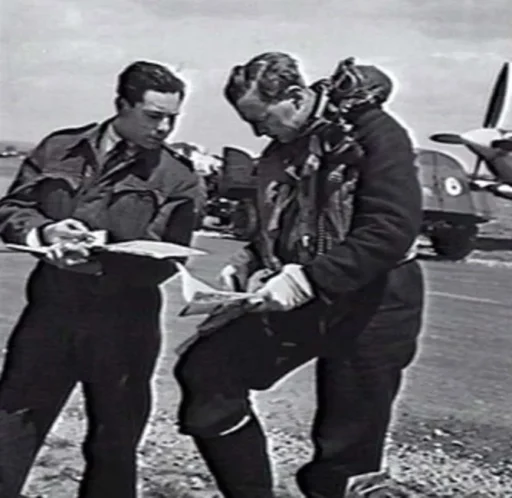
He continued with the squadron through the early weeks of the campaign to liberate Europe. On 24 July 1944 he was flying one of four spitfires in a patrol near Bayeux France when his group were notified enemy aircraft were believed to be approaching their position. His Section Leader spotted two aircraft approaching from above and behind and warned the group to watch them closely.
As the approaching aircraft got within 800 meters the Section Leader ordered the group to break starboard. The approaching aircraft were identified as American Thunderbolt aircraft, but the pilots of the Thunderbolts mistook Pilot Officer Kinross’s group for Germans.
The leading Thunderbolts turned sharply and came in behind Pilot Officer Kinross and opened fire at a distance of approximately 300 meters. The leading Spitfire in the group was in position to shoot down the Thunderbolt but withheld fire, having correctly identified it as an allied plane.
Pilot Officer Kinross’s starboard wing was struck in the first burst of fire before a second burst hit his port wing. His Spitfire began spewing black smoke and crashed into thick wooded country where it burst into flames.
It is believed Pilot Officer Kinross did not attempt to take further evasive action until after he was struck because he had recognised the Thunderbolt as a friendly aircraft and did not expect it to attack.
The other three Spitfires returned safely to base, but Pilot Officer Kinross was killed on impact. His body was recovered from the wreck of the plane and interred in the Military Cemetery in Bayeux, France.
The commanding officer of 453 Squadron, Donald Smith, wrote in his official report on the incident that “the chief factor contributing to the incident appears to be that the Thunderbolt pilots concerned were either not acquainted with the appearance of Spitfire aircraft or were entirely careless in their attempt to recognise them.”
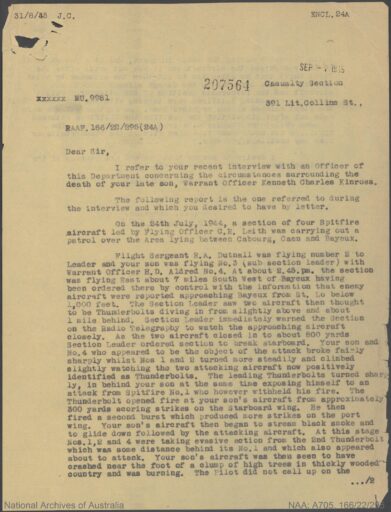
Pilot Officer Kenneth Kinross was 22 years old at the time of his death.
RSL Victoria pays tribute to Pilot Officer Kenneth Kinross, his family and all those who have sacrificed in the service of their country.
Lest we forget.