“We look after each other here”: How the Ararat RSL changed a veteran’s life.
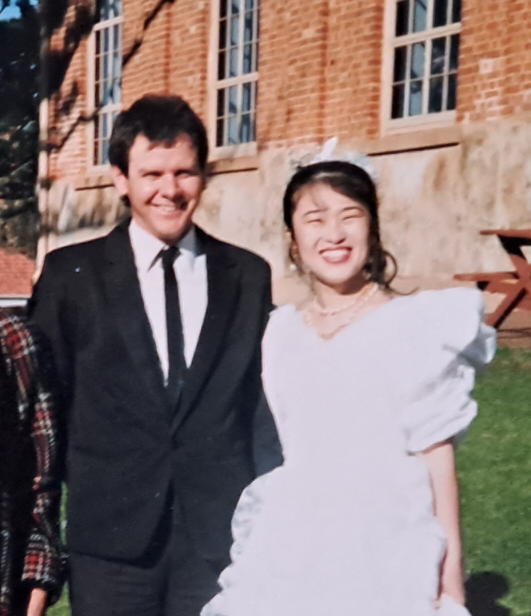
These days, Ray Sullivan spends his time between a caravan and a house he and his wife Mitsue (Miki) own in Ararat, Western Victoria. The caravan was the realisation of a long-held dream he and Miki had to travel Australia after they retired. The desire for travel and adventure had indirectly been what brought them together in the first place.
Travel was something that Ray fell in love with in the Air Force. He was 17 years old when he enlisted in the RAAF and was posted to Butterworth Air Force base in the Malaysian state of Penang when he was 20. It was an experience that changed his life forever.
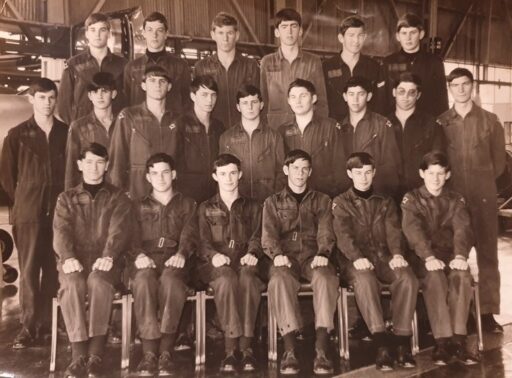
“Before Butterworth, I was pretty young,” he said. “When I joined, I didn’t really know what I wanted to do with my life. Being posted overseas in Butterworth really opened my eyes. It made me realise I wanted to study and travel and do something with my life. It really got me thinking about my future.”
Ray had signed up for nine years in the Air Force under an apprenticeship, and still had six years to serve, but he began planning for life after service.
On his return to Australia, he was posted to Richmond Air Force base in New South Wales and applied for a Japanese language course at Macquarie University with the aim of travelling to Japan to work as an English language teacher.
The plan paid off in more ways than he could have expected. While working in Japan he went to a bank where Miki was working, and she asked what he was doing in Japan. When he told her he was an English language teacher, she asked him if he did private lessons.
He began teaching Miki English, and a close friendship soon developed into a relationship which saw them marry and have two boys together. Ray loved living in Japan and raising a family with Miki but when their eldest son reached 16, they realised their boys would have a better future if they went to university in Australia.

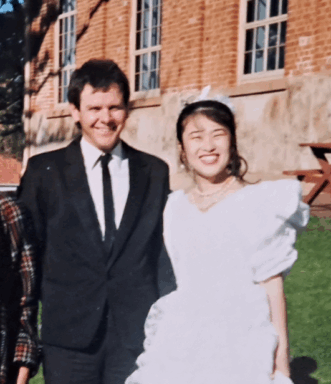
The family moved to the Gold Coast, where the boys planned to study, and they bought a property in Ararat as part of their long-term retirement plan – properties in regional Victoria being much more affordable than southeast Queensland at the time. After the boys finished university, Ray and Miki moved to their property in Ararat. It was then that Ray began to worry that something was not quite right with Miki.
She had always been brilliant with maths and numbers, but he began to see she was having trouble with even basic calculations.
“It was subtle at first,” Ray said. “Just little things, but it was noticeable. And she started suffering from depression.”
Ray tried to get a diagnosis for Miki. He took her to doctors who dismissed his concerns about the possibility of dementia. He was told that as she was still under 60, it was more likely depression that might be related to settling into a new country and culture.
Ray was eventually able to get specialists from Dementia Australia to make a home visit. The specialists confirmed Ray’s suspicions: it was quite likely Miki had early onset dementia.
But getting an official diagnosis would take two years and consume Ray’s life.
As her condition worsened, caring for Miki and trying to get her the help she needed, began to weigh heavily on Ray. He was watching his wife go from the intelligent partner who had been at the centre of his life for 35 years to a woman suffering deep depression and increasingly unable to care for herself.

In 2022, when Miki went home to Japan with her youngest son to visit family, Ray found himself in a dark place as he struggled to come to terms with his wife’s illness. He heard about a suicide prevention workshop being organised by Ararat RSL Sub-Branch and decided to go along. There he first met Lyn Russell, the Sub-Branch’s wellbeing advocate.
After speaking with Ray, Lyn grew concerned about his mental health and decided to directly ask him if he had been having any thoughts of suicide. Ray had the courage to tell Lyn that he was in a dark place and that suicide had crossed his mind.
“I knew that Ray had to be our top priority,” Lyn Russell said. “He needed someone to navigate for him, to point him in the right direction.”
Getting a diagnosis itself was hard enough, but then facing the bureaucracy of applying for NDIS support was more than Ray could manage on his own.
After referring Ray to Open Arms, Lyn set about helping Ray get the support he needed. She arranged for Miki to attend an adult day care program at the Patricia Hinchey Centre so that Ray could have some respite.
“Until Lyn and then Open Arms stepped in, everything was in a muddle,” Ray said. “Getting Miki into day care meant that I had a few hours a day where I could organise things.”
Lyn also arranged for basic support services like lawn mowing to take some of the pressure off. She assisted him with the NDIS application so that he could get the services Miki desperately needed. Ray and Miki also began attending the Ararat RSL Active program. He took over the running of the fortnightly chess and card games at the RSL and later started teaching Japanese at the University of the Third Age. Ray and Miki became a part of the Ararat community.
When Ray was found to have a melanoma during a medical check-up, he needed to travel to Geelong to have it removed but had no way to get to the appointment. Ararat RSL Sub-Branch arranged for a car and driver to take him to and from the appointment.
However, Alzheimer’s inevitably continued to take its toll on Miki. It not only affected her memory but her personality. As the disease developed, she became more aggressive and then violent.
“One day the police had to be called,” Lyn said. “It had reached a point where it was no longer safe for Ray to have Miki living at home.”
Lyn helped Ray get a place in an aged care home which could provide care for Miki. Because of her aggression, the only place that could take her was in Ballarat.
“It’s not ideal because it is a fairly long drive and is only meant to be temporary,” Lyn said. “But in regional areas there just are not that many places that can care for Miki.”
In August, Ararat RSL Sub-Branch organised for a bowling day at a ten-pin bowling centre in Ballarat and arranged for Miki to take part, with the assistance of her carer.
“It was a really emotional day, and fantastic for Miki to be able to be there with Ray. She even got a strike.”

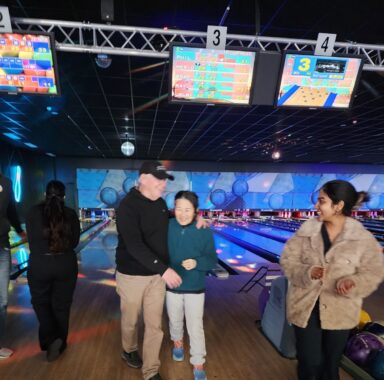
Ararat RSL Sub-Branch has supported Ray visiting Miki every fortnight in the aged care centre. Lyn lives near Ray and regularly calls and checks in on him to make sure he is okay.
In 2024, Ray took up a role as a badge seller for the RSL in the Poppy Appeal to raise money for the kinds of programs that have helped him over the last few years and will be helping again this year.
Even as Miki’s condition deteriorated, the social connection and support Ray received from the Ararat Sub-Branch meant that his own mental health improved. Beyond the practical support he received, he now had a place to go where he could talk to fellow veterans.

“Meeting other veterans made a real difference to me,” Ray said. “I was alone and cut off. Through the RSL, I meet other veterans. Veterans have a unique connection with other veterans; we can talk about our service and speak the same language. We understand each other.”
“Ray has improved immensely over the last 18 months,” Lyn Russell said. “Last Christmas Ray stood up during the veterans’ Christmas lunch and told everyone how much his life had changed, thanks to the RSL. We look after each other here.”
Ray is hoping that Miki can be moved to an aged care centre in Ararat so that he can be with her more often. He and Miki never managed to take a trip in their beloved caravan. He knows they will never travel together again, but he is grateful for the time they had together, and the help Lyn Russell and the RSL gave them in their darkest hours