Lance Corporal Andrew Jones – Afghanistan
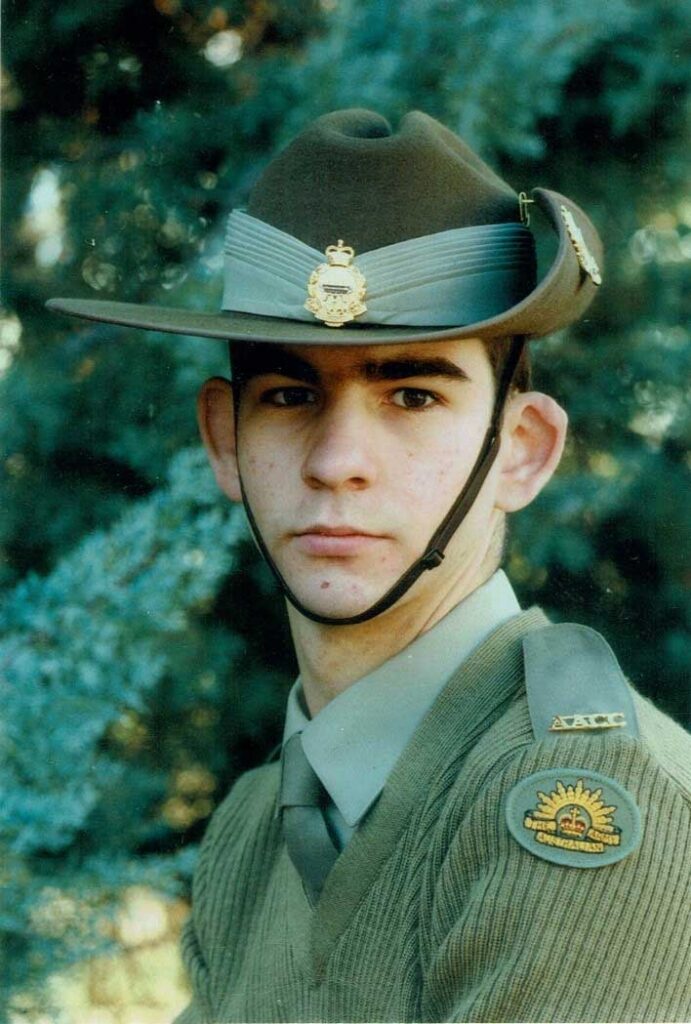
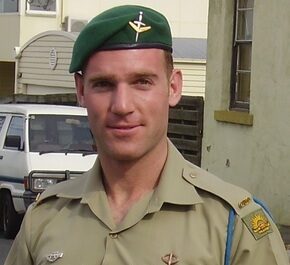
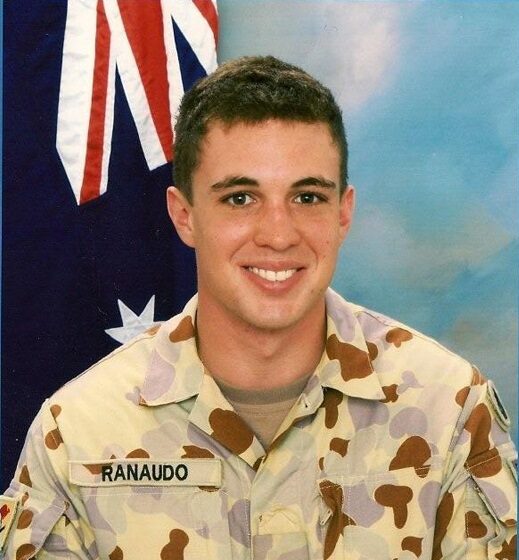
When Lance Corporal Andrew Jones was working in the kitchen at the Combat Outpost Mashal in the Chora Valley of Afghanistan there was always a tiny piece of home with him.
Andrew was an Army cook who took his job seriously. He knew that his fellow soldiers needed something to look forward to after going on patrol in the dangerous valley. The Army provided the basics, but he depended on spices sent from his family back in Melbourne to make the meals memorable.
“He used to say there was nothing there to give the food a lift,” his mother Jennifer Jones said.
“We would send him spices,” his father David said. “Cajun, seasoned salt, there was probably a dozen or so spices we would send over to him.”
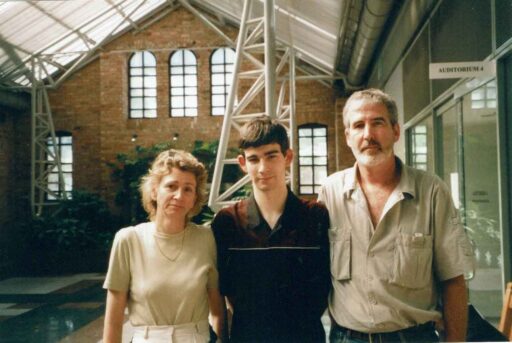
Food had always been an important part of family life when Andrew was growing up in the Melbourne suburb of Kingsbury. The family ate very little in the way of take away, with his father David preparing many of the family’s meals, teaching Andrew some of the cooking techniques he would take with him to the Army in later life.
“We never went to McDonalds, or had much in the way of processed foods, take away was a treat and not the norm,” David said. “There was the odd birthday but even then, most of the birthday parties happened in the back yard at home with his friends.”
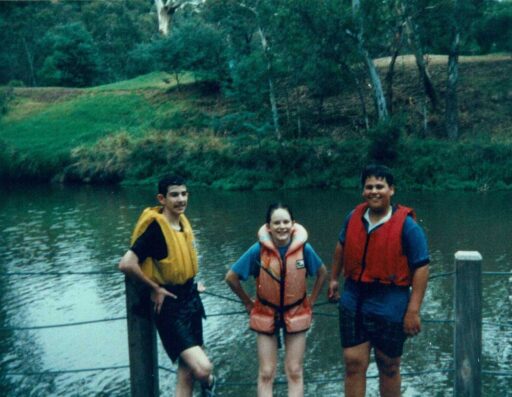
Growing up one of Andrew’s closest friends was his cousin Trent.
“They used to love playing War Hammer and games with miniature models,” Jennifer said.
“He tried football for a while,” David said. “Mostly because Trent did, but his heart was never in it.”
Going to school at the local state primary and high schools Andrew was not a high achiever academically but further developed his love for food, taking cooking classes all through High School.
When he left school, he initially looked at getting a hospitality apprenticeship but knew the pay and conditions would be low to begin with.
“Mum, he said to me,” Jennifer said. “If I join the Army, they will teach me to be a cook and pay me.”
For Andrew it was a clear choice, and he applied to enlist in the Army with the aiming of being a cook when he was only 17 years of age. He was disappointed to be rejected on his first application, and even more confused when he was told he turned down because he had not passed the test to qualify for entry as an Officer.
“He said I don’t want to be an officer,” Jennifer said. “I want to be a cook!”
Andrew did not have long to wait, however, receiving a call not long after that places had opened and his family had to hastily arrange a birthday for him before went away basic training.
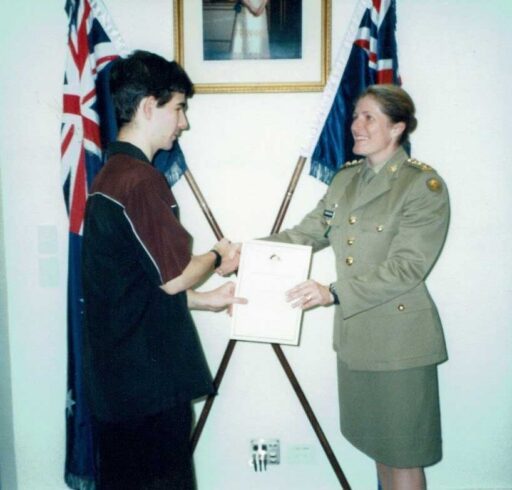
“We got a call from him soon after he started,” Jennifer said. “A sergeant had come up to him screaming ‘Did you forget to tell me something Jones’ and he thought he was in big trouble. It turned out he hadn’t mentioned it was his birthday!”
Andrew grew used to this kind of humour in the Army. His mates called him Taxi, because his ears stuck out either side which they said looked like a taxi with its doors open.
“Andrew told them he needed them to so he could keep his hat on,” his father, David, laughed.
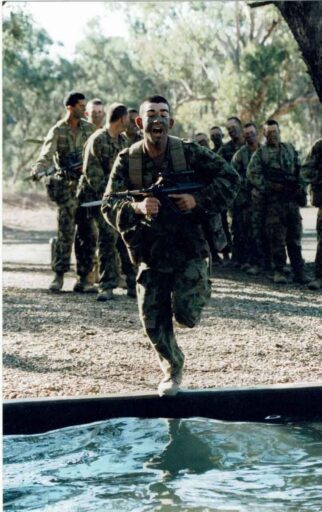
Andrew completed training as a cook, and it was often things he had learnt at home that made him stand out.
“His father used to break up meat for bolognese sauce with a potato masher,” Jennifer said. “He did it while he was in training and the chef asked him what he was doing, but he said it was faster. It was a trick he picked up from his father.”
Andrew was posted to the Catering Platoon of 1RAR at Townsville where he worked for several years after completing his training in 2004. He was popular and well regarded, especially by many of the women he served with.
“He was a real gentleman,” his mother said. “If they were out drinking, he would always escort the women back to base to make sure they got back safe.”
Jennifer called him regularly while he in Townsville and got to know a lot of his friends who would answer his mobile for him when it rang.
“They would be a bit drunk on the weekend when I called but they got to recognise my voice and started calling me mum too, I used to call them my sons from another mother.”
Andrew got his first taste of service overseas when he was posted to East Timor in 2008, but not as a cook. He was employed as the Army postie, distributing mail around East Timor.
When he came back, he was posted to the RAAF base at Amberley near Brisbane where he met his girlfriend, Joe.
The Army recognised him as a potential leader and, much to his reluctance, selected him for the Junior Leader course which led to his promotion to Lance Corporal.
“He really only wanted to be a cook,” David said. “He didn’t want to be an officer or move up the ranks, but he had developed so many skills that he had to start doing the courses and progressing his career.”
In 2010 he was due to be deployed out of Amberley but told his mother he was being held over for possible deployment.
“I asked him what that meant,” Jennifer said. “He said it means I might be going to Afghanistan. I wasn’t happy about that, obviously. He had missed out one time before and I had done a little happy dance.”
But this time he was selected to go to Afghanistan and serve as a cook on forward bases like Patrol Outposts Mashal and Razaq.
“It was an important role,” his father David said. “When the troops had to prepare their own meals, the Army could have up to a third of its patrols out with stomach issues because they would come back filthy from patrol and all be preparing food together. Having Andrew there, making the meals in a more hygienic way, meant the patrols could go out at full strength.”
Having a cook on base was also good for morale. With a lifetime of watching his mother and father prepare home cooked meals Andrew employed every trick he had to make the food something soldiers out on patrol would look forward to having when they got back on base.
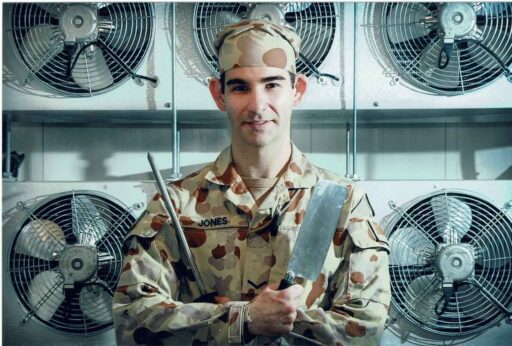
In remote areas of Afghanistan this was not always easy. On one occasion his stove broke down, and he had to rearrange the menu and find a way to prepare food with only a microwave oven.
“Andrew called us and asked us to send him all the microwave containers we could find,” Jennifer said. “I said why wouldn’t you just requisition them through the Army and he said, mum, if I do that it will take months to arrive, if you send it, I’ll have them in a couple of weeks.”
The close relationship Andrew had with his parents came to benefit all the troops Andrew was preparing meals for. The spices and extra ingredients they sent to him, along with basic items for food preparation, turned OK meals into something to look forward to and gave Andrew and his parents a feeling that they were together still, despite being thousands of miles apart.
Like other Australian soldiers deployed to Afghanistan, Andrew was also directly mentoring an Afghan National Army soldier in the kitchen, teaching him meal preparation for soldiers and picking up hints on local meals too.
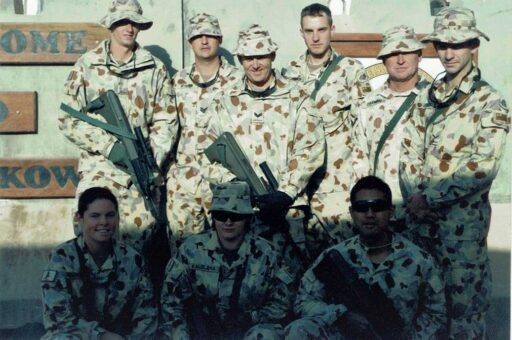
The relationship between Australian soldiers and the Afghan National Army troops they were training could be strained, with around 50 so-called green on blue attacks a year, where Afghan National Army soldiers turned on co-aition forces. There was also the danger of being killed by Improvised Explosive devices every time he left the base and even rocket attacks from outside.
“Despite the dangers he enjoyed his time in Afghanistan,” Jennifer said. “He would call almost every week to tell me how it was going, but it was not easy to speak on satellite phones.”
Andrew returned home to Australia in April 2011, on leave to visit his family and girlfriend for his birthday. He was proud to attend the ANZAC Day march to the Shrine of Remembrance.
The day before he was due to return to Afghanistan, he bought a new gaming console and realised it had picked up a virus. He went to his cousin, Trent’s, house to repair it and stayed over for the night. In the very early morning of the day, he was to fly out he walked around 3 kilometres back to his parents’ house to say goodbye.
It was the last time they saw him alive.
Three weeks later, at 7.10 pm on 30 May 2011, David was just finishing making dinner for the family when they heard a knock on the door. Andrew’s sister, Anthea, was working at her desk and began to cry when she looked outside and saw two men in military uniform at the door.
Jennifer opened the door but cannot remember anything that happened in the following moments as she escorted the men inside their house. When he saw the uniforms, David simply said “Andrew” because one of the men was a Reverend and that could only mean one thing.
In the early hours of the morning Andrew had risen late to prepare a breakfast for soldiers returning from patrol. He had gone to the toilet and inside was fired on by a rogue Afghan National Army soldier, Shafied Ullah, who had only recently arrived at the outpost. Shafied escaped under fire from other Afghan National Army soldiers as attempts were made to save Andrew’s life.
He was evacuated by helicopter to the Tarin Kowt base and operated on by three surgeons for three hours, but they were unable to save him.
The grief at Andrew’s passing was felt very widely. The family gathered to mourn, Jennifers’ sister Sandra, who was in the Army, took charge of the situation, acting as liaison with the Army and the media on behalf of the family. She was the mother of Andrew’s cousin, Trent, and on the night when Andrew died, she found Trent at home with his mates.
“They were losing the plot,” Jennifer said. “Sandra brought them to our house, where everyone was gathering. They all broke down; it was the hardest thing to see how upset Andrew’s friends were.”
Beyond the family’s grief they had to deal with what they call the four ringed circus of his funeral and homecoming. Media parked in front of their house and on one occasion cornered Andrew’s grandmother, who was in her 80’s, asking if she thought Australia should be in Afghanistan. His funeral was attended by politicians from across the spectrum, against the family’s wishes.
“His real funeral was the ramp up ceremony,” Jennifer said. “Just his family and the military. That was our private time.”
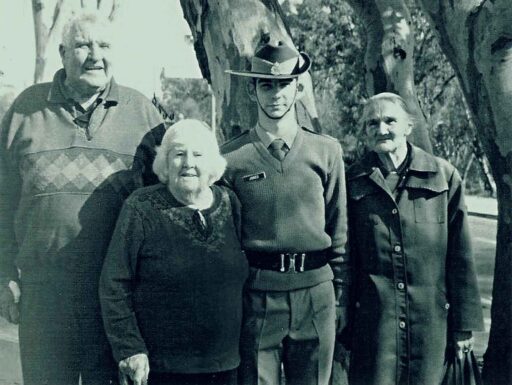
Despite this the family also found there were random moments of kindness from strangers. They wanted to print photos of Andrew to give out to the family and the man at the photo shop asked them in halting English “Your son?”
He refused to let them pay for the photos.
In Afghanistan those who knew Andrew suffered in their own way. The cook that Andrew had been mentoring took the news very hard, breaking down and draping an Australian flag over this tent in tribute to Andrew. He begging to go out on patrol to find Shafied Ullah, and kill the man that shot Andrew.
Three weeks later Australian troops managed to locate Shafied Ullah, and he was killed in a firefight.
“We were told he had a motorbike waiting for him,” David said. “So, it was pre-planned but not with Andrew in mind. It was opportunistic in that sense. In the search for Shafied, 13 other Taliban were killed.”
Andrew was remembered in many ways. A sign was hung over the bar on base renaming it “Jonesy’s Bar and Grill.”
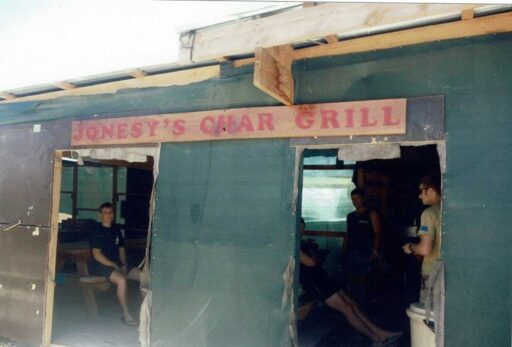
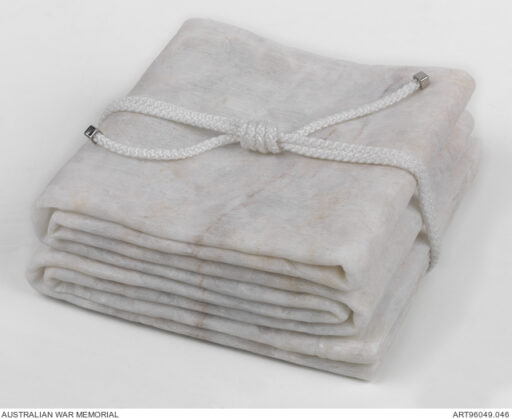
For his parents one of the most moving moments came when they were invited to the Australian War Memorial by then director Brendan Nelson. He took them to the newly installed artwork “As of today…” which featured marble folded flags, each one representing an Australian killed in Afghanistan.
“Brendan Nelson let me pick up the marble flag,” Jennifer said. “It was so moving. Andrew was the 25th Australian killed in Afghanistan, and the sculpture was started around the time he died.”
Sadly, another Australian soldier, Marcus Case, died only hours after Andrew. In the years that followed 22 more Australians would lose their lives because of the war in Afghanistan.
Completed in 2014 “As of today…” now has forty-seven marble folded flags.