Major Geoffrey McCrae – First World War
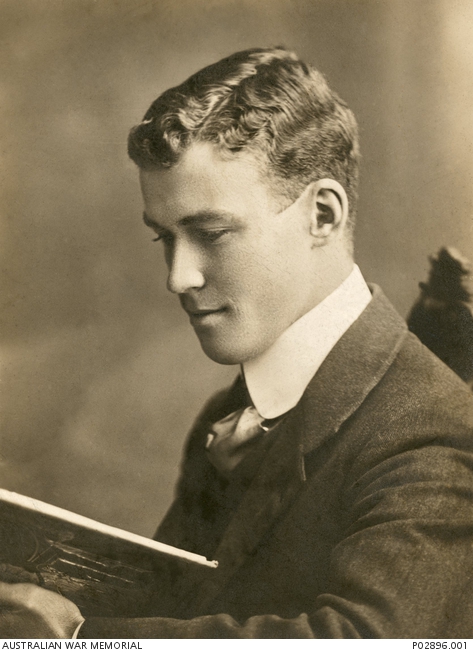
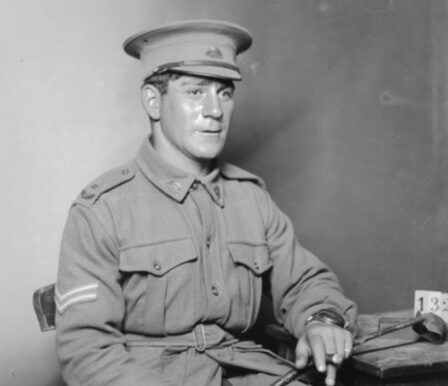
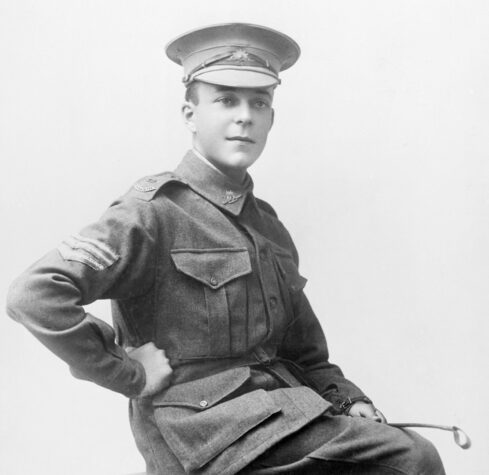
RSL Victoria remembers the sacrifice of Major Geoffrey McCrae who gave his life in service of his country during the First World War.
Geoffrey McCrae was born on 1 January 1890 in Hawthorn, Victoria, one of five children born to George and Augusta McCrae.
He attended Church of England Grammar School before enlisting in the Permanent section of the Commonwealth Military Forces in 1909. He was commissioned as a Second Lieutenant in 1912 and rose to the rank of Captain at the outbreak of the First World War.
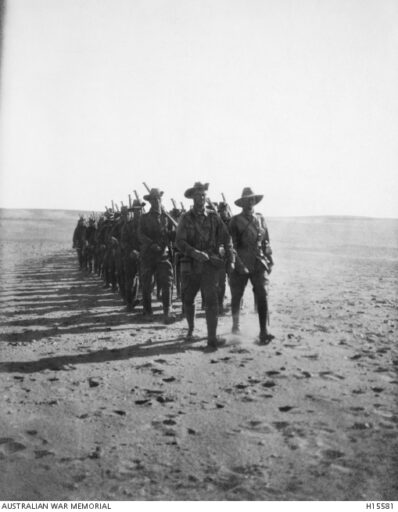
He joined the Australian Imperial Force in August 1914 and was assigned to the 7th Infantry Battalion, departing for service overseas on 19 October 1914. He arrived in Egypt on 2 December 1914 where he and his battalion camped beneath the pyramids and completed further training as they prepared to face the Turkish Army at Gallipoli.
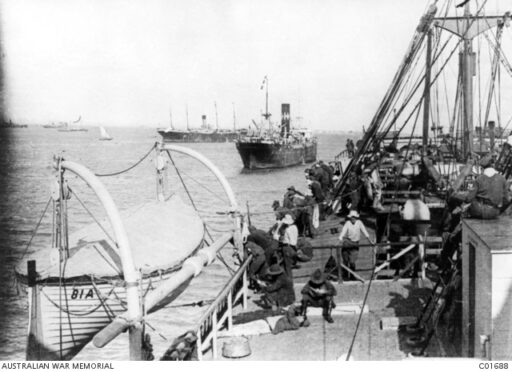
In April Geoffrey McCrae was transferred to the transport ship HMT Mashobra where he served as a military officer. He was frustrated at being in sight of, but not with, his battalion as it landed at ANZAC Cove on 25 April 1915.
He spent the first weeks of the Gallipoli campaign at sea, transferring the injured on a hospital ship between Gallipoli and Egypt. On 2 May he wrote to his family telling them that “I have passed through a most awful week of mental stress. I have been a spectator and not a participant in the great feat which Australian arms performed…..a mile and a half away my men and brother officers who are short of rest, food and water are fighting for their very existence.”
His chance came in May when he rejoined his battalion in the trenches of Gallipoli and was twice wounded in fighting.
By July, and now promoted to the rank of Major, the reality of the war was all too real for Geoffrey McCrae. He wrote in his diary that “There came to me a blinding flash and a huge detonation and I found myself taken out of the trench and covered with dirt. I remained in the tunnel until the storm abated and then I decided to return to the dressing station. What a wreck our trenches presented, shapeless mess of fallen sandbags….our communication trench was all blown in, so much so that we were quite in view of the enemy.”
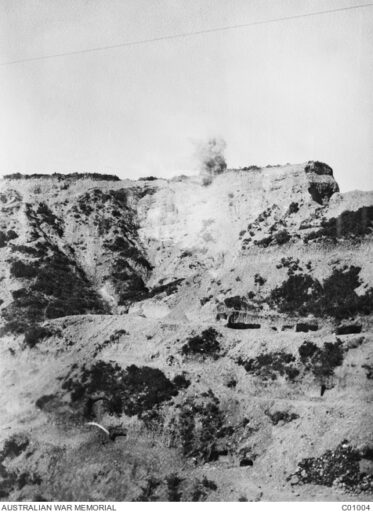
A shell had left him with a badly damaged face and eye, and suffering with what was described as Shell Shock. He was withdrawn from Gallipoli back to Egypt where he spent around six weeks recovering. He returned to the trenches in late August and was given temporary command of his battalion in September 1915.
Over the following months his diary recorded the regular bombardment from Turkish artillery. On 19 December 1915 he joined his battalion in the evacuation from Gallipoli, noting in his diary that even as he marched out to the beach “The Turks opened up a fierce fusillade at our empty trenches, at daylight he shelled the whole line….but we evacuated without a casualty.”
Following the withdrawal from Gallipoli he was admitted to hospital with a fever, finally being discharged from hospital in May 1916. He was transferred to the 60th Battalion and arrived in France in late June 1916.
In July he was given command of the 60th Battalion as it arrived at the village of Fromelles near the city of Lille in France.
On 19 July 1916 he wrote one last letter to his family. He told them that “Today I lead my Battalion in an assault on the German lines, and I pray God I may come through alright….If not I will at least have laid down my life for you and my country which is the greatest privilege one can ask for. Farewell dear people, the hour approacheth.”
The task appointed to Major McCrae was hopeless and his commanding officer Harold Elliot had urged his superiors not to proceed. He was ignored.
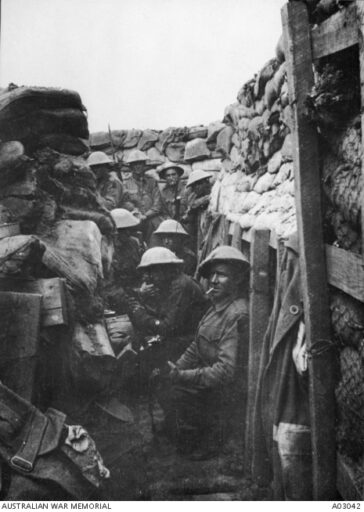
At 6pm, in full daylight, Geoffrey McCrae led his men across no man’s land. It spanned a distance of between 80 and 400 meters wide and was overlooked by an array of German defences and machine guns. In the ensuing carnage 5533 Australians would become casualties.
Major McCrae’s 60th Battalion alone would lose 757 men and be all but wiped out. Among the dead was Major McCrae himself who had been cut down while leading the attack.
The losses at Fromelles remain the highest Australia has ever endured in a single night.
Major McCrae’s body was recovered shortly after the fighting, and he was buried at Rue-du-Bois Cemetery in France. He was 26 years old.
RSL Victoria pays tribute to Major Geoffrey McCrae, his family and all those who have sacrificed in the service of their country.
Lest we forget.