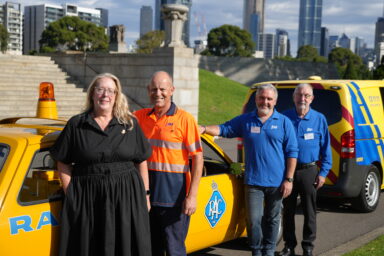
Suzy Wilson RSL ANZAC DAY Ambassador – First Gulf War Veterans
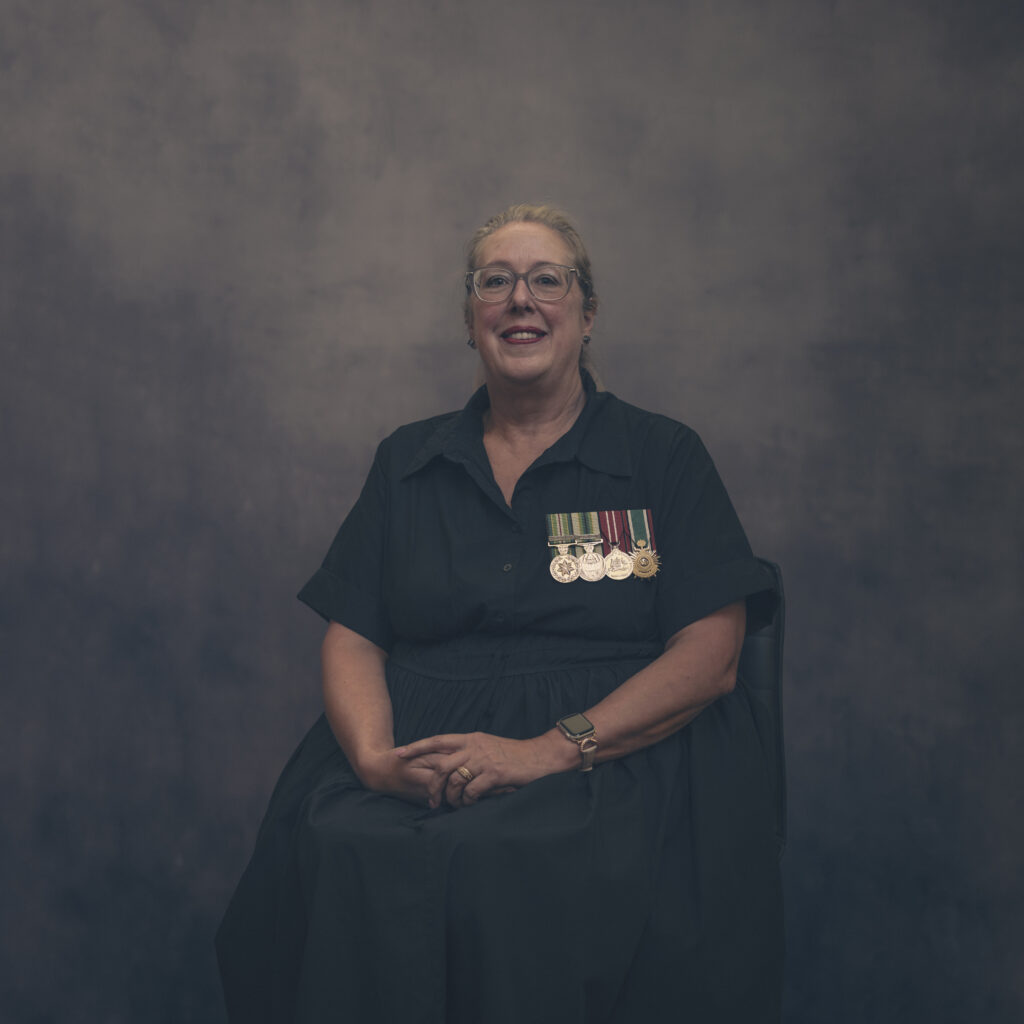
The 2026 RSL Victoria ANZAC Day March will be focused on peacekeeping operations in the Middle East, including Iraq and Afghanistan. Six Ambassadors have been appointed to represent veterans, families and locally employed workers, such as interpreters.
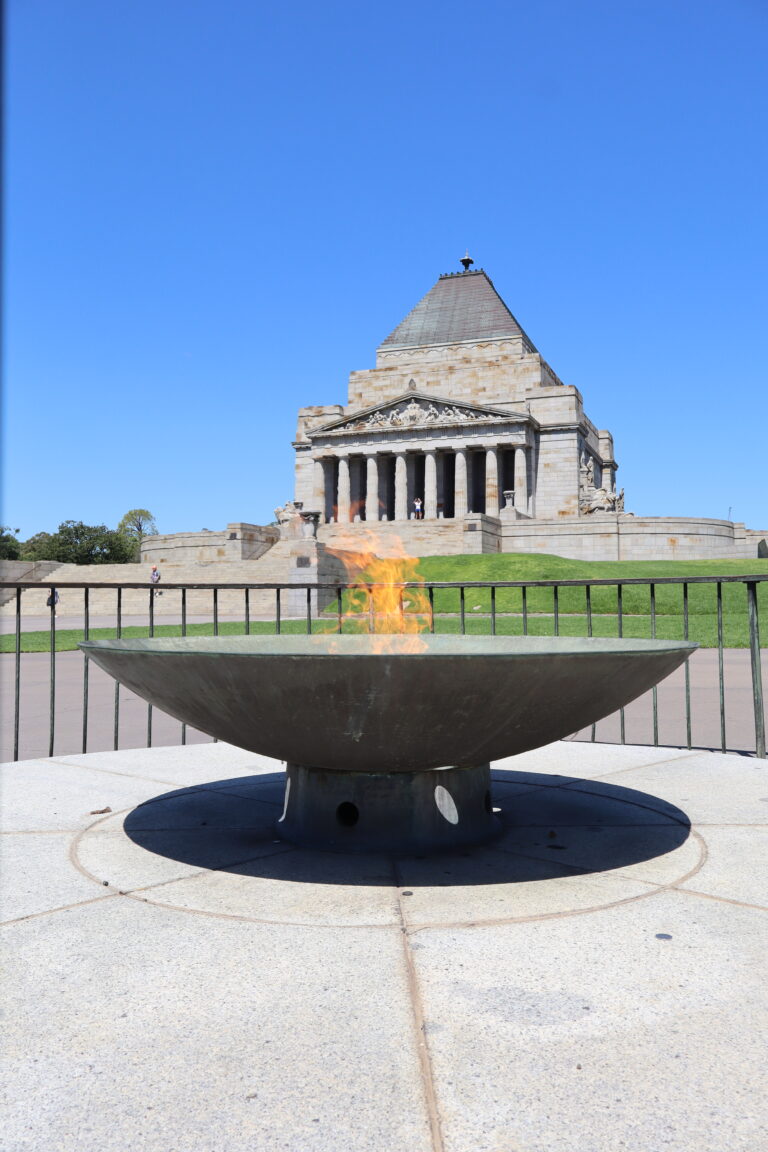
Suzy Wilson has been appointed as Ambassador for First Gulf War veterans at the ANZAC Day march. She will be joining the other Ambassadors in leading the march down St. Kilda Road to the Shrine of Remembrance.
Suzy Wilson RSL ANZAC DAY Ambassador – First Gulf War Veterans
When Suzy Wilson was serving as a radio operator on HMAS Westralia in the Middle East in 1991 the ship received an unusual flashing light signal from Argentinian Navy ship, the Almirante Brown, during a refuelling.
The Westralia and the Almirante Bown were both part of the Multi-National Force fighting in the First Gulf War to push Saddam Hussein’s Iraq back out of Kuwait. But the message from the Argentinian vessel was not related to the war.
“They wanted to know if we really had women on board,” Suzy said.
Just prior to Suzy joining the Westralia the Australian government had overturned a ban on women being able to serve on the front lines. She and six other women on the Westralia were the first Australian women to serve in a combat zone.
-
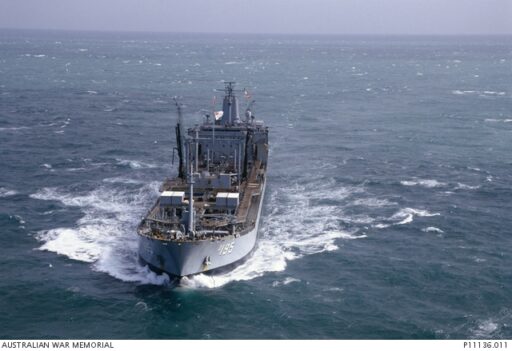
HMAS Westralia on route to the Persian Gulf in 1991. Courtesy Australia War Memorial P11136.011
“The men on the Westralia made me take my long hair out, which I was not happy about,” Suzy said. “Just so the Argentinians could see I was a woman through their binoculars.”
The Australians signalled back to the Argentinians that they had seven women on board, something that not even the United States Navy had at the time.
“The Argentinian’s answer was very sweet though,” Suzy said. “They signalled back: Seven to us is the world.”
Suzy did not envisage herself as a trail blazer for women in the military when she was young. She had grown up in the small western Victorian town of Cobden, where her father worked for the butter factory that was the birthplace of Western Star butter.
She had developed an interest in Japan and had strong Japanese language skills after a year as an exchange student in her second last year of high school. She had considered getting work in the tourism industry but also applied for the Navy and Air Force with an interest in some of the more challenging technical roles.
In the end the Navy got in first.
When she joined the Navy the Sex Discrimination Act had just been passed by the Federal Government, leading to a radical shake up in the way women served in the armed forces. As with any change there was some resentment, particularly from the men who would now be competing for roles with the women for the first time. But for Suzy it presented the opportunity to do the sort of technical work she loved, such as being a radio operator.
“There was so much to learn, I could already touch type but there were so many codes and different types of radio equipment, so it was a really interesting technical role.”
She was in the fourth group of women to be integrated with the men and on the same promotion roster. The changes meant that rather than being confined to base women were also being trained in the same roles as men and with the real prospect of being able to serve at sea.
After her training was complete, she was posted to HMAS Albatross where she worked at the Naval Communications Area Local Station (NAVCALS) doing radio work for the small boats and submarines.
While she loved her work at the NAVCALS she had heart set on one goal throughout her time in the Navy.
“Going out to sea and doing the job I was being trained for as a radio operator at sea, was always the dream for me,” Suzy said.
That dream was realised in 1990. In August of that year Iraq invaded and occupied Kuwait. In response a coalition, led by the United States, threatened Iraq with war if it refused to withdraw from Kuwait.
Australia’s contribution was mostly in the form of ships from the RAN including HMAS Adelaide and Darwin supported by HMAS Success which arrived in August 1990. In December HMAS Brisbane and HMAS Sydney arrived in support of Operation Desert Storm, with fighting starting after Iraq ignored a demand to withdraw from Kuwait in mid-January 1991.
Suzy was one of seven women posted to HMAS Westralia in November 1990 which was due to deploy in January to replace the HMAS Success. It was not only the culmination of a six-year dream for her but was the fulfilment of a decades long dream for women in the military.
It was just over ten years since women had achieved equal pay in the Australian Defence Forces and seven years since the Women’s Royal Australian Navy had been integrated into the RAN. Now Suzy was amongst the first women to serve on a naval ship and be sent to a combat zone.
But not everyone on board welcomed her and the other women with open arms.
“When I first stepped on the ship a male crew mate came over and said, ‘You are not welcome and we don’t want you here.’ I told him if he had a problem call the people responsible for postings and take it up with them.”
While Suzy believes he was part of a vocal minority he was not the only man to make such comments to her and the other women.
“We were all determined to show that we were not a handicap,” Suzy said. “If there was a short man on board who couldn’t do something like lift the fuel lines because he was short the other men might take the piss out of him, but they wouldn’t question his right to be there. For the women, if we had trouble with anything we were told we were weak and we shouldn’t be there.”
-
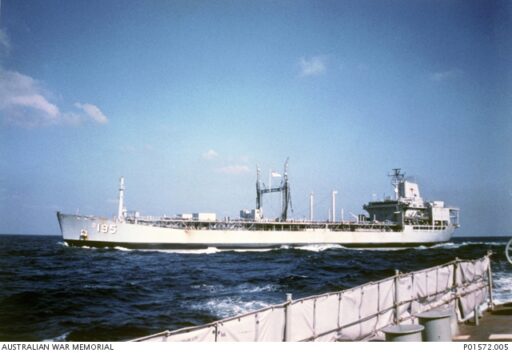
HMAS Westralia HMAS breaking away after fuel replenishment at sea for HMAS Brisbane. Courtesy Australian War Memorial P01572.005
There were four radio operators working on the Westralia which was operating as a minimum crewed ship. As a result, they four radio operators all agreed to work rotating work rosters of eight hours on and eight hours off. The eight hours off, where they could either sleep or rest, was often interrupted by alerts and drills that meant they seldom got enough rest before going back on duty.
“It was exhausting,” Suzy said. “But I didn’t think about it as being male or female. I had a job to do and was determined to do it as well as I could. ”
HMAS Westralia arrived in the Gulf on Australia Day 1991 and relieved HMAS Success. During her time in the Gulf Suzy had limited contact with her family through letters and some reverse charge phone calls but did not understand just how much of the war her family had seen on TV. Though they were thousands of miles away they were watching live pictures of Scud missiles fired out of Iraq falling on Israel and coalition forces in Saudi Arabia.
“It was the first war to be seen live on TV,” Suzy said. “My parents were terribly worried for me, watching live pictures coming out of the Gulf, but on board I had no idea what they were seeing.”
While Suzy and the other women on board Westralia were focused on doing their job there was no escaping the novelty of being a woman in a combat zone. While it resulted in open hostility from some male crew members it remained a vocal minority. With other ships, especially Americans, the sailors would take them out to dinner and for a drink simply because they missed having women around them.
Being in a war zone she was not allowed to wear her uniform when she was on land and had to dress conservatively in the Muslim countries at which they docked.
“The people were so glad we were there though,” Suzy said. “When Kuwait was liberated, people were tooting their horns and yelling out thank you for being here.”
Following the war Westralia returned to Australia and Suzy finished her time in the RAN in 1993 after more than eight years’ service. While she went on to work in the private sector, she had difficulty adjusting to some parts of civilian life.
“When I was in the Navy and we were told to do something, we just did it,” she said. “But in civilian life I found there was a lot more arguing when jobs were assigned, instead of just getting on and doing it.”
2026 marks the 35th anniversary of the First Gulf War and like many veterans Suzy feels the conflict is often overshadowed by the Second Gulf War and Afghanistan. That lack of recognition even extended to her local RSL.
“I wanted to join the RSL after I left the Navy, but when I turned up at my local Sub-Branch, I was told they did not recognise the Gulf War and I could only join as an affiliate member. ”
-
Suzy Wilson RSL ANZAC DAY Ambassador – First Gulf War Veterans Photo Matthew Martin – Veteran Photos
Suzy says she is immensely proud to have been selected to be an Ambassador for the 2026 ANZAC Day march and wants to use the opportunity to talk about the things that should be at the very heart of what the RSL is in the 21st century.
“To me it is about advocacy. I want to use this opportunity to talk about the fundamental role of the RSL. It is about the RSL advocating for the right and entitlements of veterans and their families. I am so proud to represent all the veterans of the First Gulf War and to shine a light on the men and women that served there”.