Winning the Hearts and Minds – Helen Ward Navy Ambassador
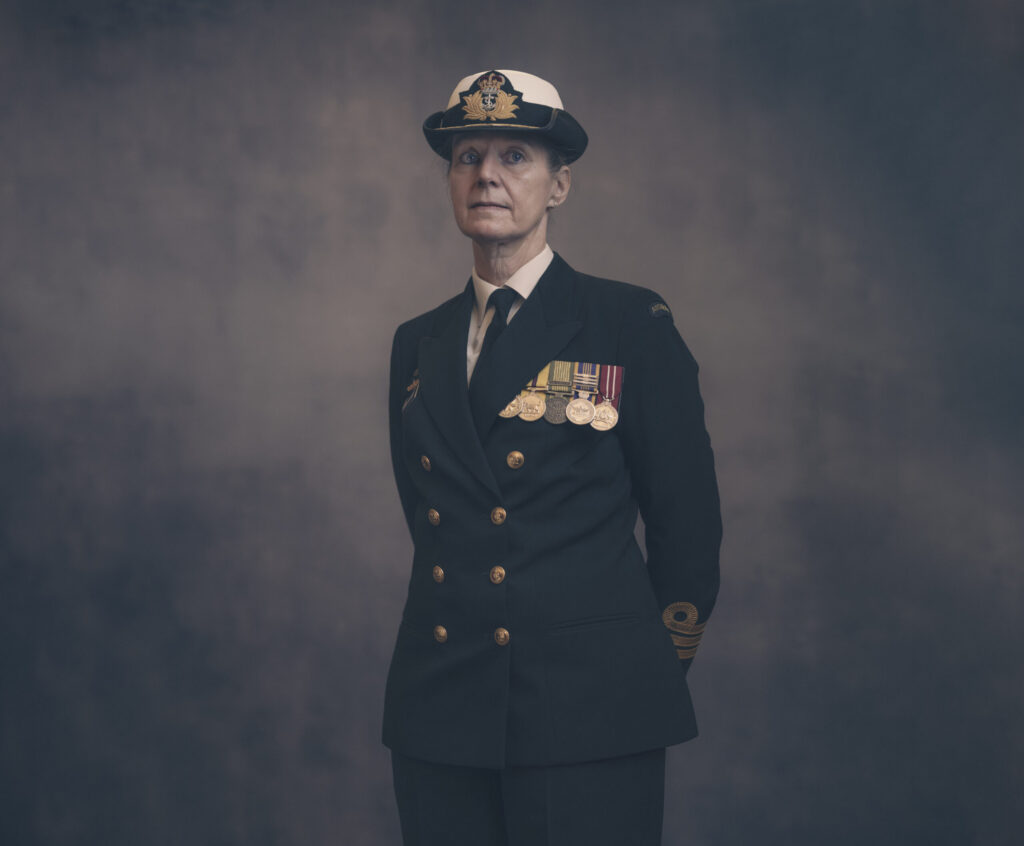
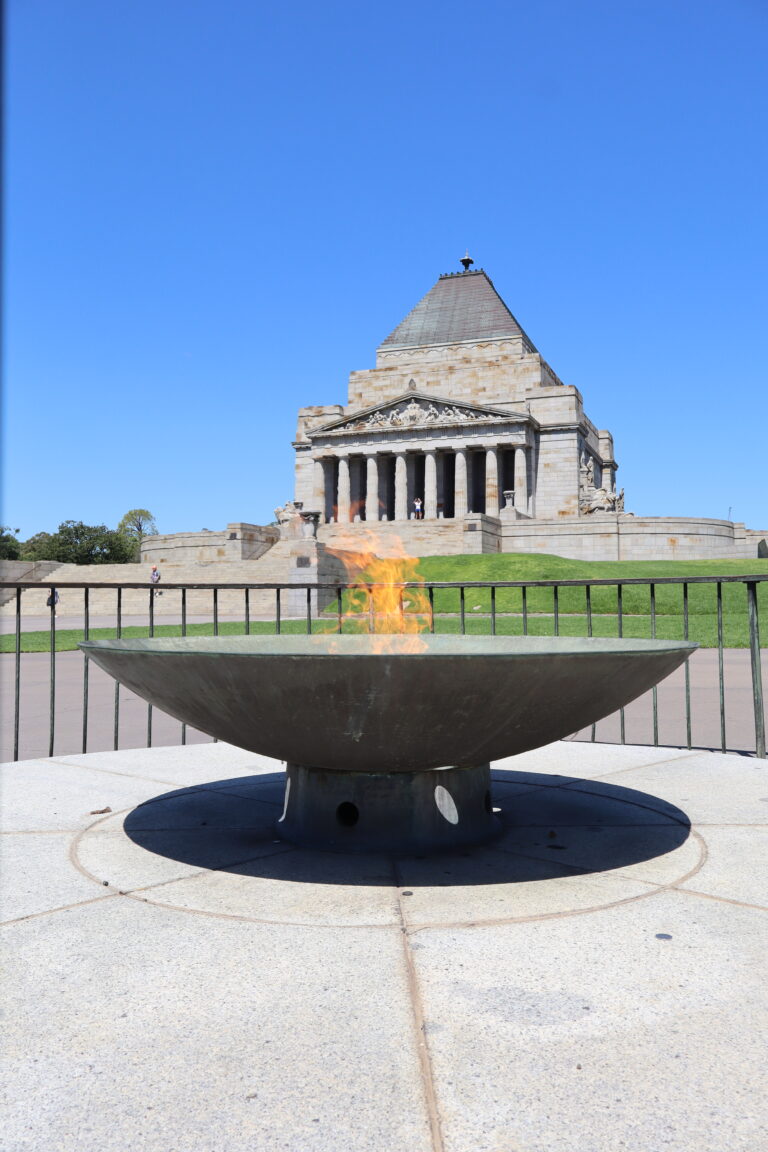
The 2026 RSL Victoria ANZAC Day March will be focused on peacekeeping operations in the Middle East, including Iraq and Afghanistan. Six Ambassadors will represent each branch of the defence forces, families and locally employed workers, such as interpreters.
Helen Ward has been appointed as a Navy Ambassador for the ANZAC Day march. She will be joining the other Ambassadors in leading the march down St. Kilda Road to the Shrine of Remembrance. She will also lay a wreath with the Governor of Victoria at the Dawn Service.
When Commander Helen Ward arrived in Baghdad the country was still struggling to quell the violence that had plagued the country since the US invasion almost five years earlier.
She was one of 12 Australians working in the so-called green zone of Baghdad, the tightly controlled area where the US led military operation was based. She was the only Australian working in the media operations centre, the team responsible for trying to win the hearts and minds of the Iraqi people.
“The first thing I was responsible was tourism,” Commander Ward said. “I couldn’t help but think who on earth is going to want to come to this country now! But it wasn’t international tourists they were talking about. It was tourism for the locals. They wanted me to try and reopen the zoo for the people of Baghdad.”
It was perhaps one of the toughest roles in communications in the world, creating a sense of safety and normality in one of the most dangerous places on earth. But Helen had a long history of breaking new ground where things looked impossible.
For Helen Ward little in life is impossible, even from when she was a teenager.
Helen was born in Geelong but raised in Echuca, the northern Victorian town on the banks of the Murray River famous for its paddle steamers, a fitting beginning in life for a woman who would make the Navy her life.
Like most Victorians, Australian Rules Football played a big part in her life but long before the women’s league she was not content just to sit and watch from the boundary line. She managed to get herself onto the ground, working as a field umpire in Rochester when still at school and then becoming the first female field umpire in the Geelong District league when she started a Science degree at Deakin University in Geelong.
“I ended up becoming the first woman to be an umpire on game day at Kardinia Park in the VFL (as it was called then). Not in the seniors though, I was the first woman to umpire a little league match at half time.”
While only the little league the role was so revolutionary at the time that the VFL did not have female change facilities for her to use.
“Billy Brownless let me use his locker and shower in the Geelong changing rooms during the third quarter of the senior’s match. Just as long as I was sure to be gone by the time the senior players came back in!”
The VFL wasn’t ready for a female umpire in the seniors, however. Finishing her science degree Helen decided to follow three of her cousins into the Navy and enlisted full-time in 1987.
She trained as an officer at HMAS Creswell then transferred to HMAS Cerberus to work as an electrical trainer but soon began to teach remedial math to young recruits. She stayed at HMAS Cerberus for two years before she was told she would be posted to a base in western Sydney.
“I was happy to be where the Navy wanted me when it was near the sea, but that did not include western Sydney,” she said. “I decided to transfer to the reserves which would give me some greater stability and the ability to choose where I lived.”
Her father and brother were both working at Telecom in Melbourne and she was offered the role of technical instructor.
Telecom discovered her natural ability to take complex technical information and make it understandable to laymen. With the change of name from Telecom to Telstra, and the move to ten-digit phone numbers, the company realised her talent for communication was her greatest asset and she moved full time into a communications role.
She moved through communication roles with Melbourne City Council, all the while active as a Navy reservist, before being offered a role with the Defence Science and Technology Organisation.
“The role was perfect for me with a background as a science major, communications experience and as a serving member of the Navy reserve,” Helen said. “My job was to communicate stories around military technology. I was good with the ships, but I quickly had a lot to learn about aircraft.”
In the Navy Reserve she was appointed as the Senior Recruiter for Military Public Affairs Office (MPAO) in 1999, supporting the enlistment of potential candidates to the MPAO. In 2007 it was her job to find a candidate willing to go to Baghdad and work inside the Green Zone in what was still one of the world’s most dangerous war zones.
“I had a candidate ready to go who had to pull out shortly before the deployment was due to start. As head of the department, I had to fill the position, even if it meant going myself.”
With no other choice Helen went back into the full time Navy and deployed to Baghdad in December 2007.
Even on the approach to Baghdad airport the danger of the posting was apparent, the RAAF pilot employing tactical flying skills which involved him making sudden movements to avoid ground fire from insurgents. Wearing 25kg of full body armour, she had to travel on what was then considered the most dangerous road in the world before arriving in the green zone.
While arriving was dangerous, the task that confronted her in the media unit was amongst the most difficult communication jobs that could be imagined.
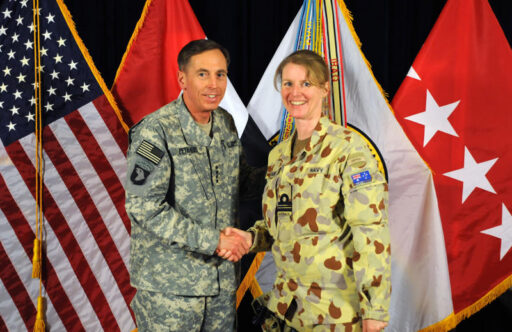
Working for U.S. General Petraeus, Commander of the Multi-National Force in Iraq she started just as the United States surge strategy was being put into effect. This surge in troop numbers was an attempt to create stability in the country and win over the hearts and minds of the people.
This involved not only attempting to restart normal life, such as reopening the zoo, but also working with the next generation of Iraqi’s who had lived all their life under a dictatorship and had no real understanding of the democracy that was being built.
“We worked with schools, bringing students into the parliament where they could see how this new form of government worked, and meet with the President,” Helen said. “Many adults were illiterate so we worked on getting them an education so they could read and write and find decent jobs.”
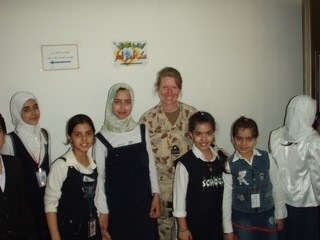
Because of the high levels of illiteracy Helen had to find ways of getting messages out to the community so they could understand what the multi-national forces were doing.
“We were trying to get the agricultural industry going again and were using helicopters to spray crops to eradicate a species of moths that was devastating crops of dates,” Helen said. “To get the message out there we drew cartoons so people who could not read or write understood what the helicopters were doing.”
A large part of her work was telling the story of the mission in Iraq to world media but there was also a desperate need to try and improve the mental health and morale of allied forces.
“We were experiencing hundreds of rocket attacks, so were all on a heightened state of alert. One rocket hit my trailer when I was out having a cup of coffee. I normally would have been there, and I would have been killed if I had. The man in the next trailer was killed.”
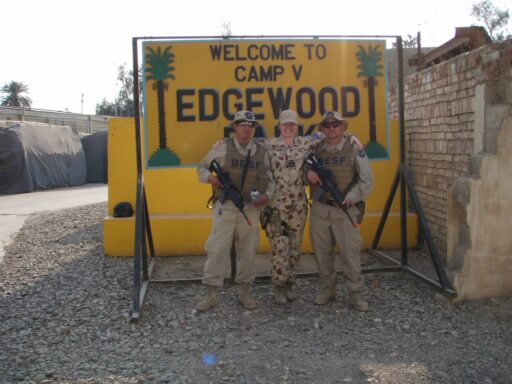
The American forces were suffering from a wave of suicides and Helen and her team started programs aimed at tackling the problem, getting soldiers to check in on their mates.
In the middle of 2008 Kevin Rudd announced that all Australian personnel would be withdrawn from Iraq, including Helen.
“It was disappointing to be pulled out of Iraq when we were, and a lot of chagrin amongst my American colleagues. I had developed some close friendships amongst the team and am still in contact with them today.”
When she returned to Australia, she worked closely with 4th Brigade on the disaster response to the Black Saturday fires of 2009 while continuing her career in communications in defence related public service.
For the first time she also decided to join the RSL.
“Before I got back from Iraq, I didn’t think the RSL was for me because it is the RETURNED Services League and I had not returned from anywhere,” she said. “Of course, it is for all veterans, but that misconception is what kept me away and is something I think the RSL needs to make clear, it is for all veterans.”
Her first interaction with the RSL did not help.
She responded to a pamphlet from the Hampton RSL saying they were in danger of closing down without support. The President invited her down to the club, saying they needed people to sell badges for the ANZAC appeal.
“When I got there the first person I saw told me, “We don’t need any help from you girlie.”
Helen turned on her heel to leave when the President came out and apologised and welcomed her into the club.
She became an active member of Hampton RSL, going on to become the President of the Sub-Branch and dedicated herself to breaking down barriers to get more veterans involved and establish better connections with the community.
“We wanted the RSL to be a community meeting place, with music and community events with things like barefoot bowling and pickleball.”
Helen made the decision to leave her civilian roles in 2020 and became more heavily involved with the Navy as two natural disasters struck. She led the Defence Public Relations Team in response to the Black Summer Fires and then almost immediately led the same team for ten weeks with the emergence of COVID-19.
The same year she was made the Manager and Curator of the Heritage Centre at HMAS Cerberus. She has made the centre an important custodian of Navy heritage, overseeing the curation and conservation of the collection while also being responsible for community engagement and education.
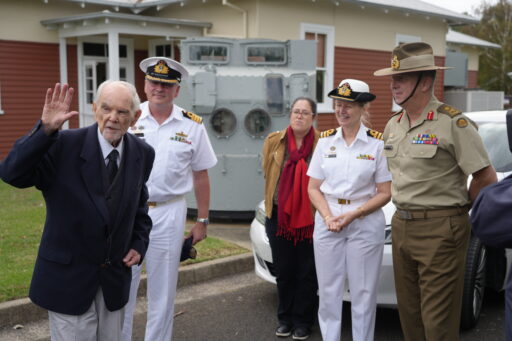
Last year she was asked to become the Visiting Ship Liaison Officer in Victoria. She acts on behalf of the Senior Naval Officer of Victoria in facilitating the arrival of Navy ships into Victorian ports, with the aim of making Victoria a go to destination for foreign Navy ships.
Helen hopes to use her appointment to tell the story of the modern Navy, and encourage more recent veterans, including reservists, to become an active part of the RSL and take pride in their service while remembering those who served before them.
“The most visible way for the community to demonstrate their support for the important work of the RSL is to go down to their local Sub-Branch and buy an ANZAC Day badge,” Helen said. “Most importantly – wear it with pride.”