We just kept on working, not thinking the war would ever come to an end
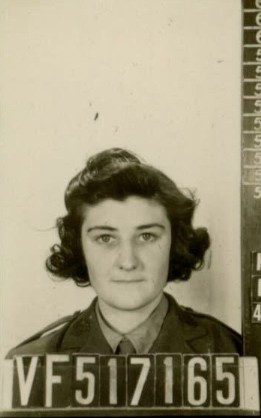
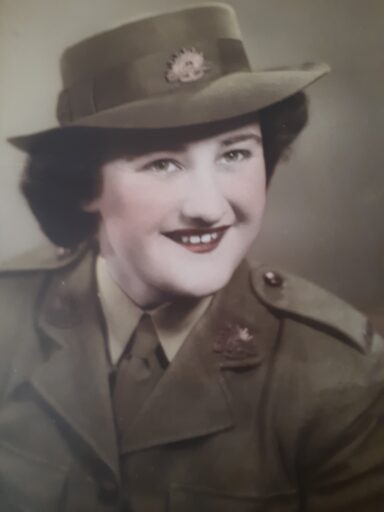
Linda Westwood (nee Fleischer) was born in 1925, growing up on the Gippsland lakes in the small town of Paynesville. She was the youngest of three children born to Jim and Elise Fleischer who owned the local general store.
Linda was shielded from the hardships of the Great Depression, living an idyllic rural childhood spending nights sitting by bonfires and days spent exploring the lakes and surrounding countryside.
She left school at 16 to take up a job as a salesgirl in a hardware store in Sale just as the Second World War began and her brother and elder sister both enlisted.
“My brother joined the Navy in August of 1940, and my sister joined the Women’s Army when she turned 18,” Linda said. “There was a war on they were recruiting, and I thought joining was the right thing to do but I had to wait until I was 18 before I could join the army.”
As part of her application to join the Women’s Army Linda had her boss write a reference on her behalf.
“She is industrious and trustworthy,” her employer wrote. “Has a pleasant manner and good approach to customers, and I have no hesitation in recommending her as one while apply herself well to all tasks entrusted to her.”
Linda was accepted into the Women’s Army and for the first time in her life moved to Melbourne where she began training. What she remembers most is the marching.
“Lots of marching,” Linda said with a smile. “I think some of the younger ones should be made to do that nowadays.”
Living on barracks, the move to Melbourne had its advantages for Linda. She attended dances and her father came down to take her to shows at the Tivoli theatre and dine at Florentino’s restaurant.
“Being in the Army I think my father was very proud of me,” Linda said. “He would come down to Melbourne and always invite me and my friend to go out for the evening with him.”
But for all the excitement of the big city the war concern for her brother overseas always paramount in her mind.
“My brother was a gunner on one of the Navy ships and we got a message that it had gone down,” Linda said.
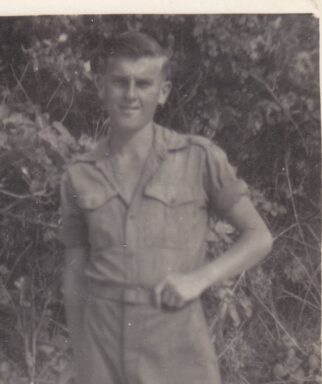
Her brother, Alan Fleischer, was on board HMAS Nestor as part of Operation Vigorous, a convoy of ships heading to the besieged island of Malta in the Mediterranean. It was attacked off the island of Crete by either Italian or German bombers and badly damaged. With the ship unable to be salvaged the crew of the Nestor, including Linda’s brother Alan, were safely transferred across to the HMAS Javelin.
“That was a relief,” Linda said. “My brother was very special to me.”
With her brother still in harm’s way Linda was keen to make a contribution to the war effort.
“I didn’t know what kind of a job I was going to get but when I did get it, I felt very proud of it,” Linda said.
Linda was posted to the 2nd Echelon LHQ operating out of the Treadways building in Prahran. It was the records management section of the Australian army and Linda’s role was decoding messages from the front line. The messages she received were about Australian casualties both dead and injured and Australian’s taken as prisoners of war. Linda and her team were responsible for documenting and disseminating the information they received.
“We didn’t get a day off for thirteen weeks, or maybe even more,” Linda said. “We were so busy we just kept on working every day. Instead of going back to camp when I finished work, I used to go and stay with friends in Hawthorn. I woke up late one morning after weeks of work without a break and I thought oh my goodness I will be late.”
As Linda was getting up and ready for another day of work the owner of the house came into her room and told her to go back to bed.
“She told me she just had word that my friend Helen was going in to work for me today,” Linda said. “I got to have a day off at last. Little things like that meant a lot to me. Helen was one of my best friends.”
On 15 August 1945 Linda was working in the Treadways building when an announcement was made that the Japanese had surrendered.
“Victory Day was wonderful,” Linda said. “We had just kept on working, not thinking the war would ever come to an end. When we heard the news that it was over, we didn’t stay in that office very long. We were all down on the street yelling and yahooing. It was just the most wonderful, wonderful time.”
Linda left the army in 1946 and went on to work at ICI and then in factories for 26 years, raising two children as a single parent following a divorce in 1961.
Linda became involved with the RSL in her 99th year, almost 80 years after the end of the war.
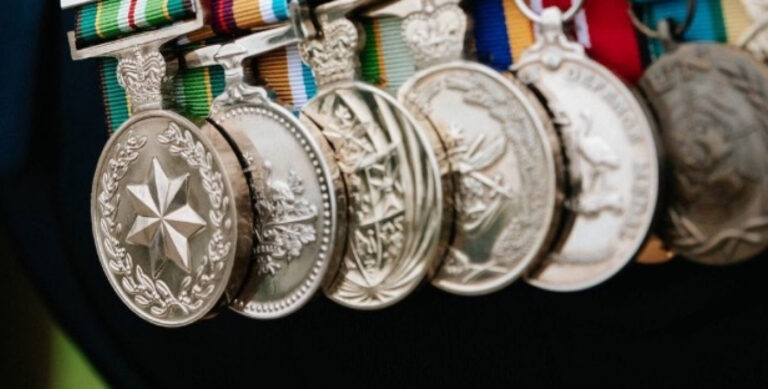
“I had some medals where the ribbon was not attached and I was missing a medal,” she said. “The RSL helped me fix the medals and get the missing medal, so I became a member on my 99th birthday.”
Linda made friends with another Waverley RSL Sub-Branch member, Gladys Butler, a 102-year-old Second World War widow and the two have become inseparable.
On 30 July Linda and Gladys were two of five centenarians to celebrate their birthday at the Waverley RSL Sub-Branch.