Lance Corporal Henry ‘Harry’ Thomas Bramley – First World War
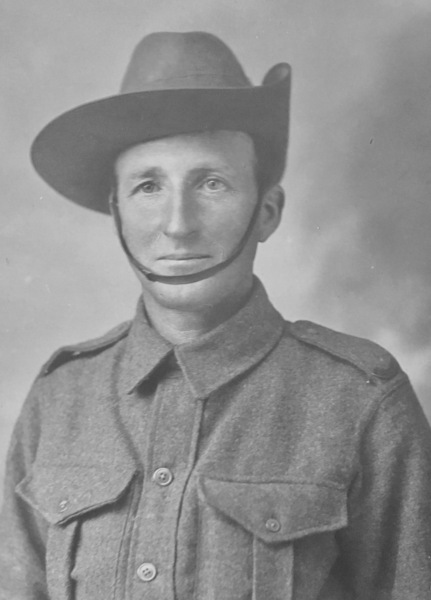
RSL Victoria remembers the sacrifice of Lance Corporal Henry ‘Harry’ Thomas Bramley who gave his life in service of his country during the First World War.
Henry, known as Harry, Thomas Bramley was born on 22 August 1879. Official records indicate Harry was born at Durham Lead; however, his father asserted his birthplace was Mincha West. Harry himself stated that he was born at Pyramid Hill on his enlistment papers.
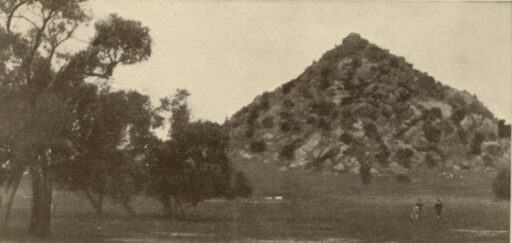
Harry was one of 9 children born to William Henry Bramley and Agnes Kilpatrick and had five sisters and three brothers. Harry’s parents resided for 40 years on a property just outside Macorna on a property that was included in the area serviced by the Tragowel Plains Irrigation Trust, established in 1886. His father was ‘a noted success in horse breeding, dairying, and agriculture’ and was nominated for the position of auditor of the Gordon Shire Council in 1886, although he later withdrew as a candidate.
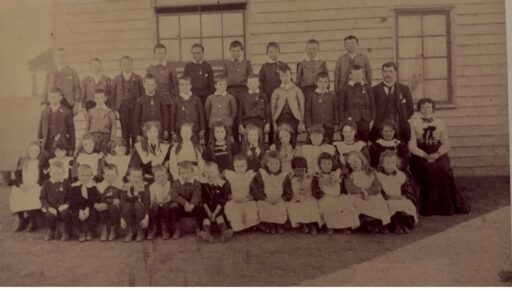
Harry attended Mincha West State School and afterwards followed his father into dairying and horse breeding. He was one of several Victorians who settled in the Undulla Creek area of Queensland after around 100 square miles was released for selection around 1908. He quickly established himself in the community becoming President of the local progress association where he led a campaign to seek assistance from government to enable settlers to restock dairy herds after the breaking of the 1914/1915 drought. He was also successful at local picnic races where his horse, ‘Lonely Dick’, placing at several events during 1913 and 1914. In January 1915, military horse buyers visited the area, and Harry was one of the successful vendors. He later reported seeing one of the horses sold at this time ‘attached to a gun carriage in the Australian artillery’.
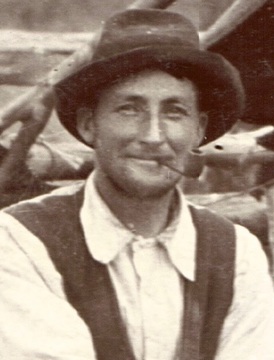
By 1916, Harry’s parents had leased the property at Mincha and retired to a house in Rodney Street, Quarry Hill. His cousin Charles Bramley Mann had joined him in the Undulla Creek area around the same time as the outbreak of the First World War. Harry enlisted in the Australian Imperial Force on 30 August 1916, and followed both his younger brother, Charles Andrew Bramley, and his cousin who had both enlisted in the second half of 1915.
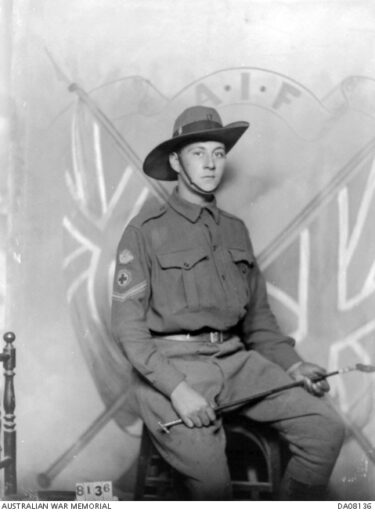
At the time of his enlistment, Harry was 37 years old and was described as 5’8 with a medium complexion, grey eyes and brown hair. Harry was originally assigned to the fourth reinforcements of 38th Battalion but was transferred to the 60th Battalion about 10 days later. He was part of the 6th reinforcements of the 60th Battalion which departed Melbourne aboard A71 Nestor on 2 October 1916. Harry disembarked at Plymouth on 16 November 1916 and proceeded to France from Folkestone on 30 December 1916 after spending some time with the 15th Training Battalion. He joined his battalion in France on 8 February 1917 and was admitted to hospital due to a neck carbuncle on 10 March. He rejoined his unit on 22 April 1917, when they were stationed at Mametz, just in time for a massed brigade parade and address by the brigade commander Brigadier General Elliott.
Harry participated in a summer rest camp from 27 August 1917 to 7 September 1917 and shortly after his return was promoted to Lance Corporal. From 9 February 1918 to 26 February 1918, he was on leave in the United Kingdom and then went to the Australian Corps Gas School. He rejoined his unit at Meterin on 26 March 1918 which was the day that the battalion received Order No 143. The subsequent day saw the battalion cleaning their billets before marching out on 28 March at 4.30am to board a train to Doullens.
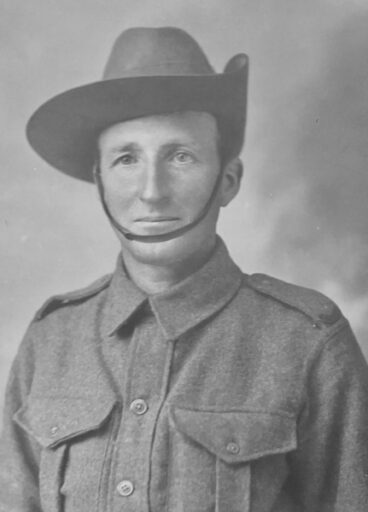
At 12 noon on 24 April 1918, the battalion received news that a counter-attack was to be launched at Villers-Bretonneux. The attack was ordered by British General Henry Rawlinson with the goal of recapturing the village and cutting off the German occupiers. The battalion was at the place of assembly by 10pm and were found to still be there at 10.20pm by the Commanding Officer. The unit on their right had not been in position so the attack was launched instead at midnight. The battalion did not reach their final objective and was subjected to heavy shelling the following day with casualties from rifle and machine-gun fire.
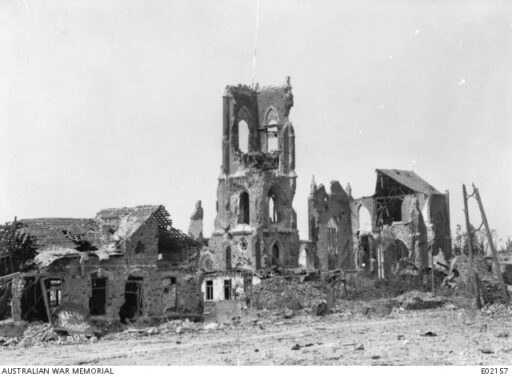
Harry was killed by shell shrapnel in the early hours of 26 April 1918 near Villers-Bretonneux. His brother Charles was in hospital in England recovering from injuries sustained from a bursting shell thirteen months earlier at the time of Harry’s death and enquired through the Australian Red Cross as to what happened. Corporal G Graham explained ‘he was killed outright by a shell which wounded two other men at about 2.20am…while leading a ration party from the dump to the front line at Villers-Bretonneux…It was about 200 yards from where I was’. Private T Hoare was in another ration party at the time and wrote that the shell had landed in the middle of Harry’s party. He added ‘…we buried him temporarily where he fell, but on the 28th, we reburied him at the Chalk Pits [British Cemetery] about 1 kilometre from Villers-Bretonneux and put up a cross.’ Harry was reburied in 1919 at the Villers-Bretonneux Military Cemetery.
Harry’s death came almost 12 months after his cousin had been killed in action on 1 May 1917 while serving with the 21st Battalion. Reverend H J Ham delivered the sad news of Harry’s death to his parents on Friday 10 May 1918. The news also reached Undulla Creek via Mr Marfleet with the local newspaper commenting that Harry ‘was well known and highly respected along the Undulla Creek, and he took a keen interest in anything that conduced to the welfare of the district’. Sadly, about three months later, Harry’s parents received the news that his brother was also killed in action on 10 August 1918 while serving with the 6th Battalion.
RSL Victoria pays tribute to Lance Corporal Harry Thomas Bramley, his family and all those who have sacrificed in the service of their country.
Lest we forget.
Last Post Written by Theresa Cronk