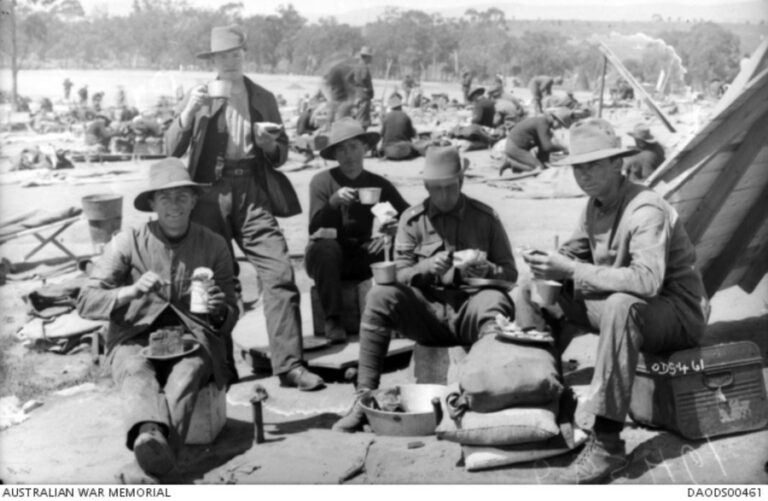
From shell shock to PTSD: how the RSL has supported veterans for 110 years
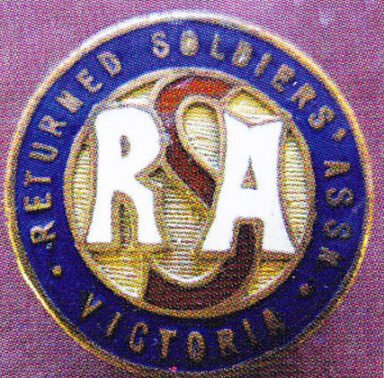
Today, 29 August 2025, RSL Victoria celebrates its 110th birthday.
What started with a small meeting of a handful of wounded soldiers has grown into the largest, and oldest, veterans’ charity in Australia.
The purpose of the association, as described to The Argus newspaper by its first secretary Mr F. Murray, was “to keep green the memory of fallen comrades and to lend a helping hand to those who might fall on evil days.”
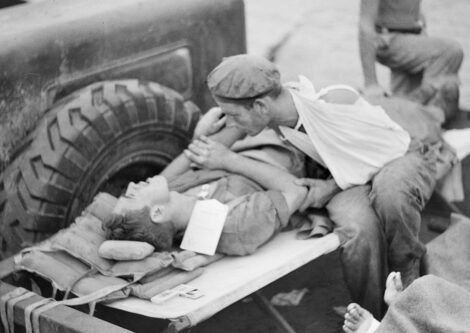
Amongst the soldiers who returned from the front lines and fell on “evil days” were increasing numbers diagnosed with a previously unknown condition called “Shell Shock”. Reports of men with no physical injuries but suffering complete mental breakdown were becoming commonplace.
The Express and Telegraph reported in April 1917 that shell shock was “nothing more or less than a nervous breakdown” in which “brave men find the strain of war too great for the mental stamina” It noted that a cure “has yet to be found though severe electrical treatment has had some effect.”
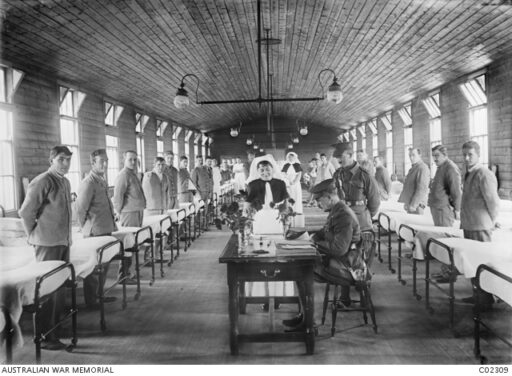
Unable to hold down employment, turning to alcohol to self-medicate and estranged from friends and family, many became outcasts from society, committing petty crime to survive. Sadly, many took their own lives.
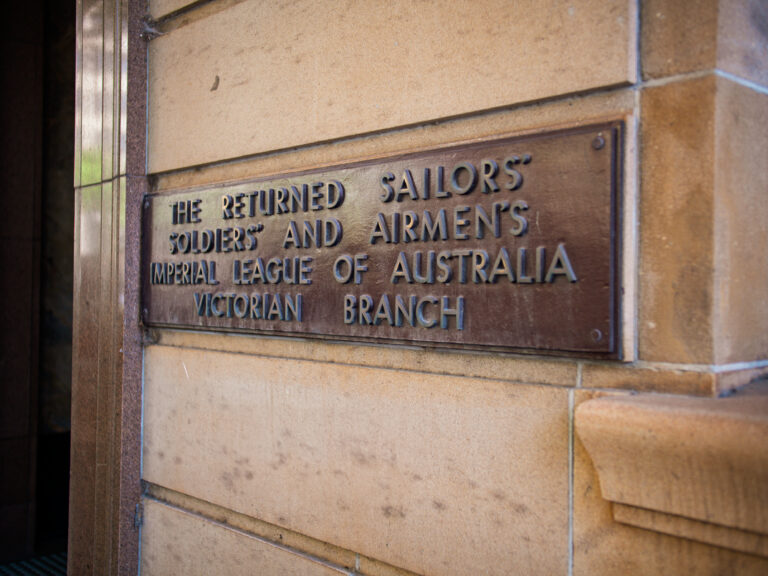
At the end of the war, a direct connection between shell shock and soldiers facing the criminal justice system had become clear. Having changed its name to the Returned Sailors Soldiers Imperial League of Australia (RSSILA), the league appealed to the government for reform like that in Western Australia. In that state The Argus reported that “if there is the slightest indication of shell shock the soldier is remanded for medical examination” with legal assistance provided by the RSSILA.
While the government gave some assistance to veterans, such as the deeply flawed soldier settlement scheme, it was up to the young RSSILA to provide the support that helped soldiers return to civilian life. Aside from offering a place for veterans to catch up with other veterans, it provided direct practical assistance to veterans across the country through its vast network of Sub-Branches.
It remains at the micro level, in individual Sub-Branches, where the original purpose of today’s RSL is still to be found.
The assistance provided to Justin Stewart, a veteran of 3RAR, is a clear example of the work the RSL Sub-Branches do in every corner of Australia.
Justin was born in Traralgon and had a lifelong dream of becoming a firefighter. He had trouble adjusting to a new school when his family moved to Bendigo at the start of Year 12 and decided to drop out of school and enlist when he turned 18, with the hope of finding a role as a firefighter in the army.
There were no positions available as a firefighter, so he enlisted in the infantry instead, joining 3RAR and being initially based at Holdsworthy. Still a teenager, Justin found himself amongst the first Australian ships bound for East Timor, landing with 3RAR on 20 September 1999 in the largest Australian deployment since the Vietnam War.
East Timor was a country in crisis. Since the independence elections in August, pro-Indonesia militia groups had waged a campaign of terror, first in the capital Dili and then throughout the countryside. Around 1400 civilians were killed and half a million displaced in the violence.
The Australians role was to stabilise the country and drive out the militia groups so the locals could come out of hiding and reclaim their country.
“It was a bit scary, we were always on edge,” Justin said. “We came into contact with the militia a few times and you never knew what was going to happen.”
Justin still finds it difficult to talk about his experiences in East Timor. He injured his ankle when dismounting from an ASLAV (Australian Light-armoured Vehicle) which had him sent back to Australia after three months, but it was the mental injuries that destroyed his career in the army and then his life.
He was medically discharged with Post-Traumatic Stress Disorder and says he didn’t know what to do after service.
“That’s when things really fell apart for me,” Justin said. “I didn’t know where to go or that supports even existed when I got out. I was going from job to job, but I couldn’t hold one down for more than a couple of months.”
Justin became restless and shifted around the country going at first to Queensland and then across to Western Australia. He developed a chronic drinking problem which resulted in a dangerous high speed police chase, landing him in court in Perth.
“The charges were pretty serious,” Justin said. “The judge said I could have gone to jail for a couple of years.”
In addition to the criminal charges, he was facing eviction from the caravan park where he was living because he was a long way behind in rent.
That’s when the RSL stepped in. When it was found he had PTSD, the RSL was contacted and provided him with legal support in the form of a barrister. The barrister was able to convince the court that a jail sentence was not appropriate in his circumstances and had Justin placed on a corrections order instead.
The RSL then paid his rent and moved him into a house with other veterans. Still restless, Justin moved back to be with his parents in Victoria in Bendigo and in 2004 the RSL paid bond and the first month’s rent on a property in Nagambie. It also bought him a car for $1500 so that he could get to work and get back on his feet.
Still struggling with PTSD and alcohol dependency, a psychologist referred him to Ward 17 at the Austin Hospital, who provide mental health treatment for veterans and serving members. It was here that he was able to get the medication and counselling services that began to stabilise him.
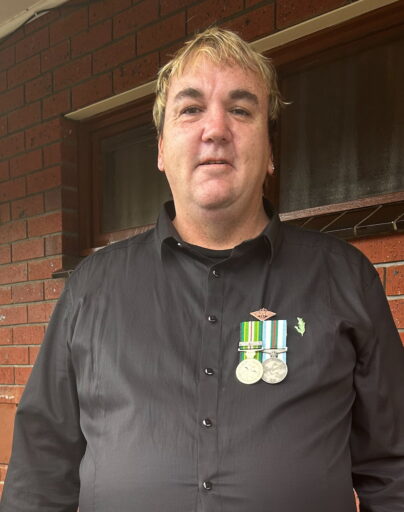
Over the years Justin has needed to return to Ward 17 for continued mental health support and seek the assistance of the RSL to keep him going.
Recently, however, Justin had a heart attack and was admitted to hospital where his medication was stopped while he received treatment.
“I could only get back on to the medication through admission to Ward 17,” Justin said. “The hospital refused to release me unless I was on the medication, but I could not get back on to it until I was admitted so I was stuck in hospital.”
Justin’s brother was desperate for help and got in touch with Frank Nuccio at Ballarat RSL Sub-Branch who visited Frank in hospital.
“He was in a bad way,” Frank Nuccio said. “He needed to get back on the medication or it is hard to know what would have happened to him.”
Frank contacted Ward 17 and was able to get Justin’s case prioritised so he could get back on the medication. Speaking from Ward 17, Justin said he could not thank Frank and the RSL enough for what they have done for him.
“Frank and everyone at the RSL have been fantastic,” Justin said. “I don’t know where I would be without them.”
Since its inception 110 years ago, the RSL and its Sub-Branches have been at the forefront of welfare for returned soldiers with an army of volunteers at the grassroots level who continue to provide support to veterans who have fallen on “evil days”.