Sheraz Ahmadi – RSL ANZAC Day Local Workers Ambassador
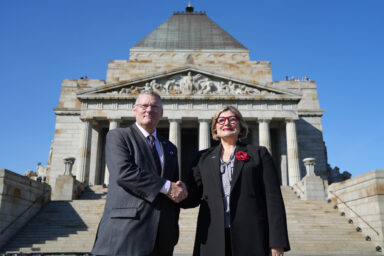
The 2026 RSL Victoria Anzac Day march will be focused on peacekeeping operations in the Middle East, including Iraq and Afghanistan. Six Ambassadors have been appointed to represent each branch of the defence forces as well as one for families and locally employed workers, such as interpreters.
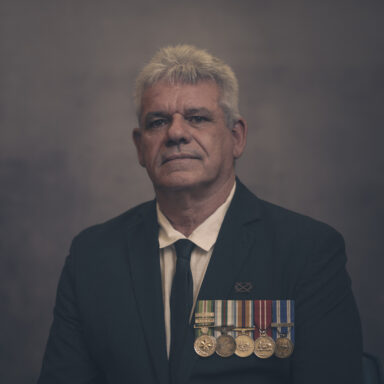
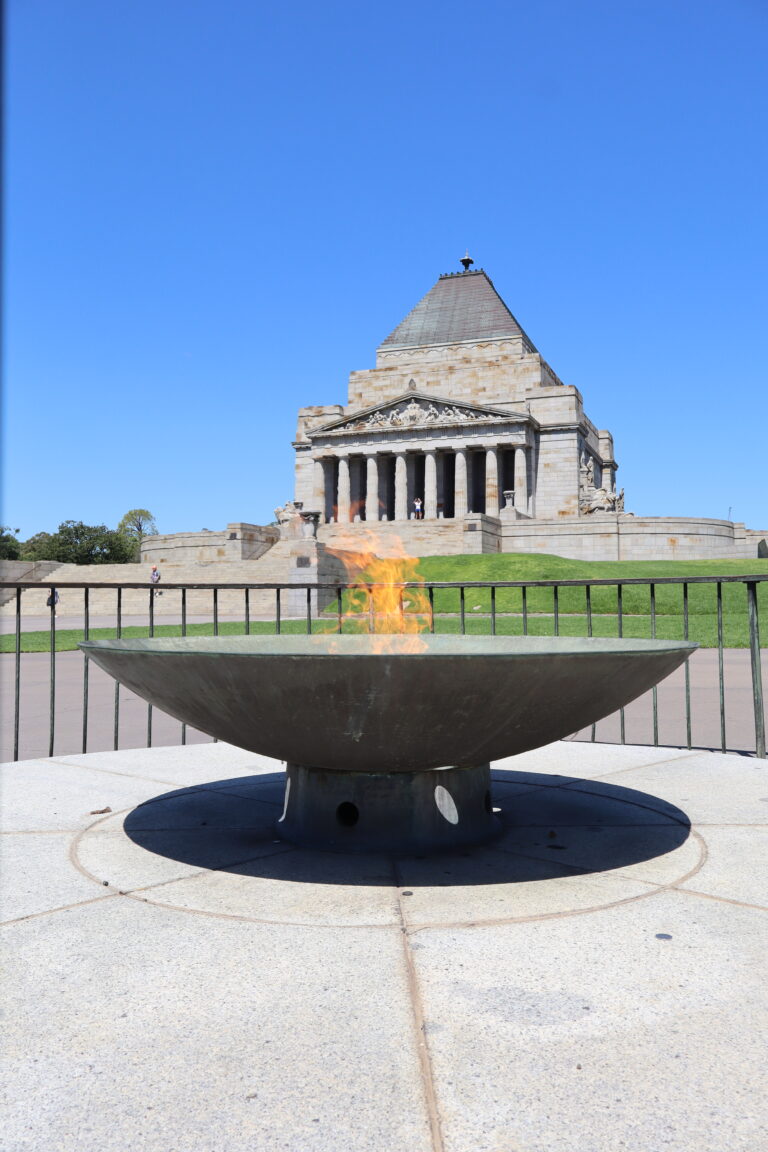
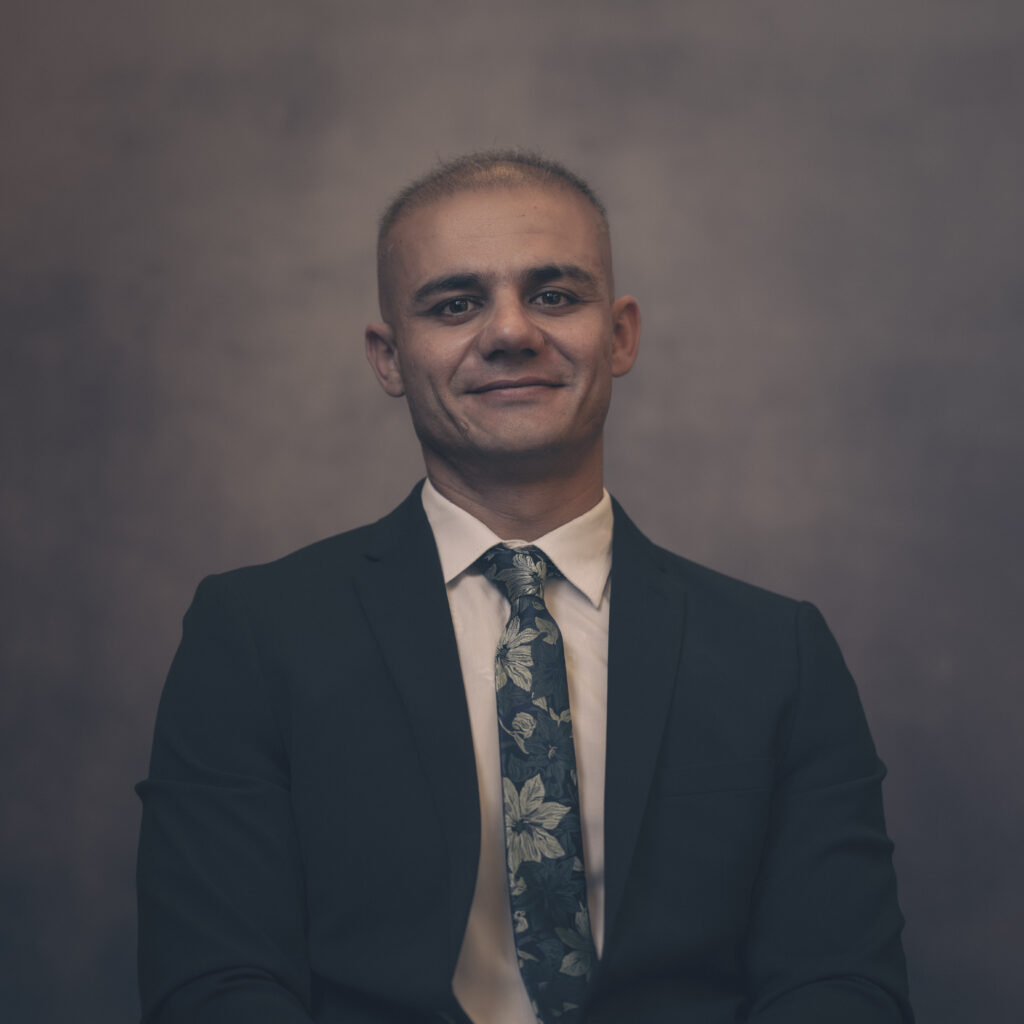
Sheraz Ahmadi has been appointed as an Ambassador representing all locally employed workers for the Anzac Day march. He will be joining the other Ambassadors in leading the march down St. Kilda Road to the Shrine of Remembrance.
Sheraz Ahmadi has only vague memories of life before the US invasion of Afghanistan in 2001.
He was born in the eastern province of Lagham, one of eleven children born to Sarferaz and Zaitoon Ahmadi. The family moved to Kabul when he was an infant where his father ran a shop selling parts for motor vehicles.
“I remember that our apartment was very close to the main stadium in Kabul,” Sheraz said. “There were often executions carried out there by the Taliban and as a child I could hear the gunshots of people being executed and the crowd yelling.”
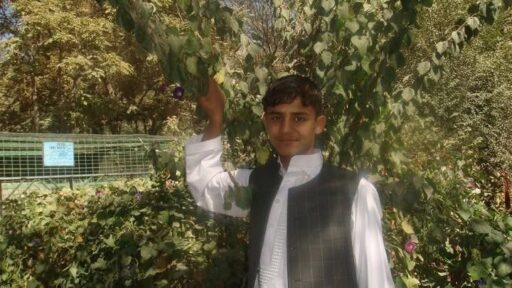
He was eleven years old when the World Trade Centre was hit, prompting the US led invasion of the country to oust the Taliban regime amidst the hunt for Osama Bin Laden.
Sheraz remembers it being a terrifying time for his family as there was a Taliban brigade directly behind the apartment where he lived.
“I don’t know why but the American planes could never hit the Taliban,” Sheraz said. “The bombs were hitting the apartments around us and missing the Taliban.”
During the American attacks on Kabul his sister was getting married, and the family had invited hundreds of guests to their house for the wedding. An air raid occurred in the middle of the wedding, and the family had to try and relocate all of the guests to another family members house as the Americans began bombing the neighbourhood.
“We had a good life once the Taliban were gone,” Sheraz says. “The economy improved, my sisters could go to school and the security in the first few years was good. People were happy.”
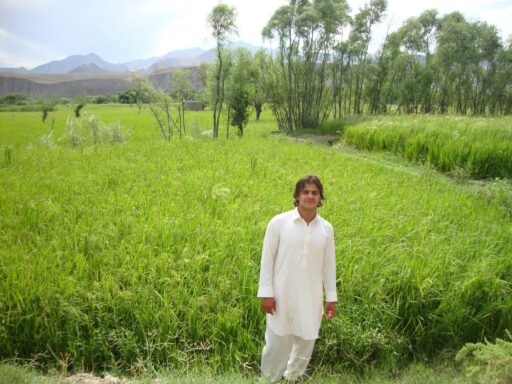
When he was 18 years old, he learnt English in a vocational course which allowed him to find work as a translator with US special forces in 2010. By this stage the security situation in Afghanistan had deteriorated and he worked with the special forces in the front lines as they battled Taliban insurgents. He was given a rifle which he could only use to defend himself if he came under attack.
“It was a dangerous position for to be in,” Sheraz said. “I lived in the American base, but when we went out on patrol, I was in the middle, between US soldiers and the Afghan National Army soldiers they were training. A lot of interpreters were either killed or captured and then executed or blown up by bombs on the roadside.”
His parents were increasingly worried about his safety in Afghanistan. Anyone working for the Americans was regarded as an infidel and at risk of being killed at any time by the Taliban. He applied for a Visa to go to the United States, but the application became stalled in bureaucracy.
In 2013 Sheraz became engaged to his now wife, Samima, and decided he wanted to become a doctor and enrolled in medical school in Jalalabad in eastern Afghanistan. He completed part of the course but decided to go back to working with coalition forces and be with his family in Kabul when he married his wife in 2015.
He applied for a job with the Australian military, acting as an interpreter and cultural advisor. The job was in some ways more dangerous than his previous role with special forces.
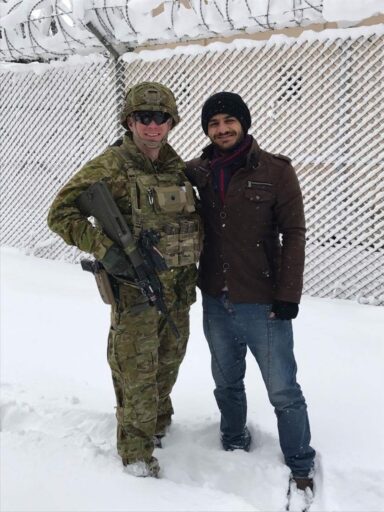
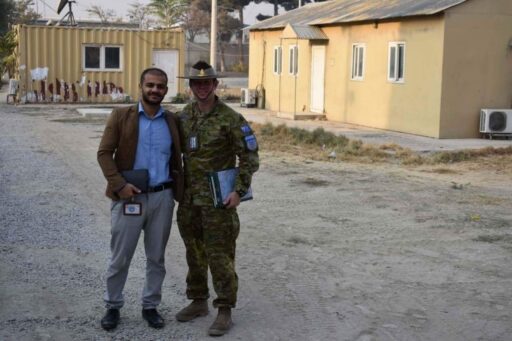
“When I was with the Americans I lived on base and was in danger when we went on patrol and came into contact with the Taliban,” Shiraz said. “When I worked for the Australians, I had to travel from the suburbs and into the American embassy to the Kabul Garrison command centre. You did not know who ordinary people were and who was the terrorists.”
In 2016 Sheraz began working with then Major Angus McFarlane, an Australian soldier acting as a mentor to the Kabul Garrison Command. Shiraz became his personal translator and cultural advisor, working together six days a week for nine months.
Angus McFarlane, who is now a Lieutenant Colonel, remembers some of the danger that Sheraz had to face on a daily basis as an Afghan working with Australian forces.
“He was very committed to his job,” Lt. Col. McFarlane said. “I would call him out of hours regarding some matters and would have to speak to him in Pashtun until he was in a safe place. If he was in a taxi and spoke in English it could present a threat to his life. His commitment to support Nato elements put his family at substantial risk.”
That risk became all too real for Sheraz and his family in 2017.
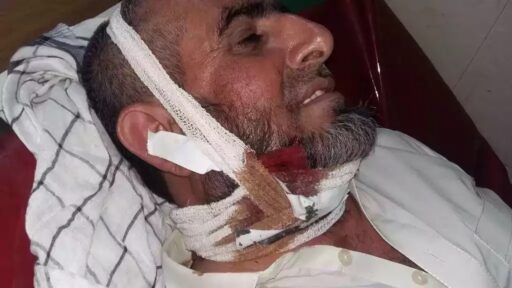
His brother was working as a police officer and was killed only two months after getting married. Later in the year Sheraz and his wife visited his parents-in-law in the clothing store they ran. As they were leaving, he heard a bang, followed by three more bangs in the crowded street. His father in-law was hit in the head by a bullet meant for Sheraz. The bullet passed through his head and out of his mouth but by a miracle his father-in-law survived. Finally, the Taliban directly targeted Sheraz’s house with a bomb which injured his father. It was clear Afghanistan was no longer safe for him or his family.
With his application to move to America still held up, and the birth of his first child, Sultan, he decided to apply to Australia instead, with letters of support from Lt Col McFarlane. The application was accepted and he and his young family left Afghanistan in May 2019.
Angus McFarlane, who had returned to Adelaide, had made Sheraz promise that he would call him when he arrived at Adelaide airport. Sheraz did not want to put him to any trouble and caught an Uber to his temporary home in Adelaide, texting Angus the next morning to let him know he had made it to Australia.
“Within an hour he was knocking at my door,” Sheraz said. “He looked after me after that, taking me shopping on the first day so we had everything we needed.”
Within a couple of weeks Sheraz and his family made the decision to move to Melbourne. He knew there was a large Afghan community in the Dandenong area. Two of his colleagues had moved there so it felt like the place he would get the most support in establishing a new life for him and his family.
Initially he decided to see if he could restart his medical career and studied biomedical science as a way into a medical degree. But already 30 years old and his second child, Sophie, arriving in 2000 he decided that he could not afford to spend ten years studying to be a doctor and had to find a way to earn a living to support his family.
Sheraz started an apprenticeship as a plumber which he recently completed. He is now a licenced plumber with his own business and his parents and five of his siblings arrived in Australia five months ago.
But not all of his family have escaped danger. His brother is stuck in Iran while his visa application to join Sheraz in Australia is being processed.
“I had to travel to Iran to visit my brother and his family because he is so stressed at being in a very harsh environment in Iran with no valid visa. He has done his medical check up and completed all the requirements but has been waiting 13 months for approval.”
Following the US-Israeli attacks on Iran, Sheraz has lost contact with his brother and is praying that he can stay safe until the Australian government grants his visa and he can escape the country.
Despite concerns for his brother Sheraz is grateful to the Australian government and people for giving him the opportunity for a new life in Australia, after he lost his home country to the Taliban.
“I have a happy life now,” Sheraz said. “But I will always remember the interpreters who were killed in Afghanistan.”
In 2026 RSL Victoria invited Sheraz to be an Ambassador for all locally employed staff who served with Australian forces in the Middle East. He will join veterans from the Army, Air Force and Navy and a family member of an Australian killed in Afghanistan, in leading the Anzac Day march.
“For me it will be one of the best memories of my life to be an Ambassador for Anzac Day. I am doing it on behalf of all the interpreters and local staff who served with the Australians. We lost a lot of people and until now no-one remembers them.”