Captain Archibald “Arch” Gladstone Corbett – First World War
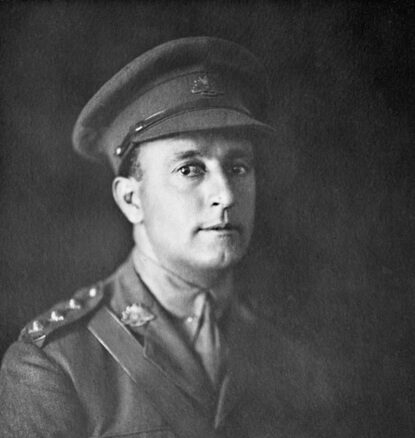
RSL Victoria remembers the sacrifice of Captain Archibald “Arch” Gladstone Corbett who lost his life after serving his country during the First World War.
Arch was born in North Fitzroy on 18 October 1883, the third of five children born to Charles and Emma Corbett. His father was a teacher at the North Carlton State School. Sadly, his mother died when he was only fourteen years of age.
A year after the death of his mother his father sent him to Wesley College for the final two years of his schooling, where he demonstrated his athletic ability on the school’s football team.
After graduating he took a position with the Australian Mutual Provident Society where his brother, Charles Junior, worked.
He served with the 6th Light Horse Militia Regiment from 1909 but left both the Regiment and his job when he was accepted into Melbourne University in 1911 where he boarded at Ormond College as he completed a medical degree.
While he was studying, he played for universities short lived team in the Victorian Football League, though the team never one any of the seven games he played in over 1912 and 1913.

Tragedy struck the family again with the death of his father, Charles Senior, in 1915.
Despite now having lost both parents he completed his studies and took a residency at the Royal Melbourne Children’s Hospital in 1917, before making the fateful decision to enlist in the Australian Imperial Force on 17 November 1917. He was granted the rank of Captain and embarked for service overseas on HMAS Nestor only four days later.
Arch arrived in Southhampton, England, on 8 January 1918.
At the beginning of 1918, after three years of virtual stalemate, the result of the war continued to hang in the balance. Russia had come to peace with Germany as Lenin led the communist revolution, leaving Germany free to transfer troops from the Eastern Front to the West. Meanwhile the United States had entered the war and thousands of new troops were arriving every month.
In a last desperate bid to achieve a decisive breakthrough the German Army commenced a major push to try and create a divide between the British Commonwealth and French forces. The aim was to drive the British back to the sea and force a surrender of the French before the United States arrived in great numbers and turned the tide of the war.
That push ended at the small village of Villers Bretonneux in France on ANZAC day 1918 when ANZAC forces halted their attack and drove the Germans back from the strategically important town.
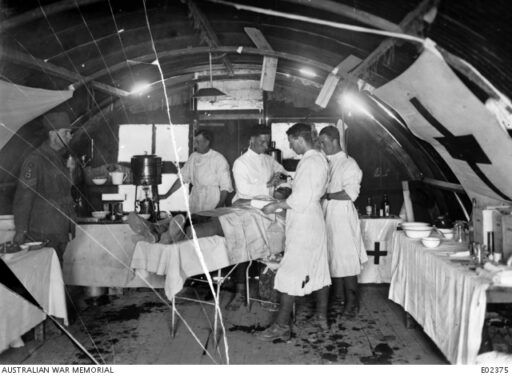
A week later Arch arrived on the Western Front and was deployed to the 13th Field Ambulance where he would spend the following months treating the wounded and dying in the final brutal months of the war.
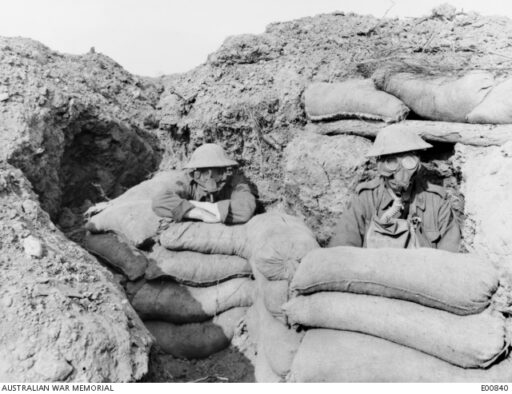
The War Diary of the 13th Field Ambulance notes that “Corbett and Hope” reported for duty on 2 May 1918 when they were stationed at Amiens, just west of Villers Bretonneux. The following day 70 “Walking wounded” casualties arrived and the horrors of the front line would have been immediately apparent to Arch.
Over the following months he worked with the 13th Field Ambulance as it treated the wounded and itself came under attack from enemy aircraft and shelling.
When the war ended in 1918 Captain Arch Corbett had survived physically but not mentally.
Arch remained in England through 1919 and finally boarded the RMS Orontes to begin the long sea voyage home in June 1920.
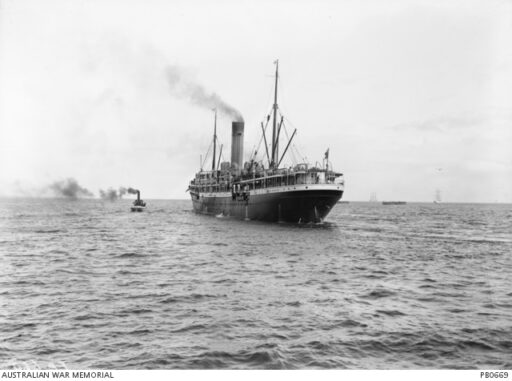
On the night of 25 June 1920, the ship was off the coast of France and Captain Corbett was sharing a cabin with Captain Waterhouse of the 5th Light Horse Field Ambulance.
Captain Waterhouse returned to his cabin in the early hours of 26 June and saw Captain Corbett get into bed and turn off his light. When Captain Waterhouse woke next morning Captain Corbett was gone and no trace of him could be found on the ship. A note was found in Captain Corbett’s handwriting which read:
“Have had insomnia for over six weeks past. For past two veronal has been used but it is now having no effect. Can only see myself going mad which is intolerable so better to go overboard. The depression is unbearable.”
Captain Waterhouse told an enquiry that he had noticed that Captain Corbett had been unusually quiet but that “having known him at Melbourne University as one with a quiet disposition, I did not pay too much attention to it.”
The enquiry found that Arch had been suffering from insomnia and depression following the war and had taken his own life by jumping overboard.
He was 36 years old.

Today he is remembered on the honour roll at Wesley College, the Villers-Bretonneux Memorial and as the Australian War Memorial.
RSL Victoria pays tribute to Captain Corbett, his family and all those who have sacrificed in the service of their country.
Lest We Forget.