Luruk-In to the Louvre – the Indigenous veteran taking her art to the world
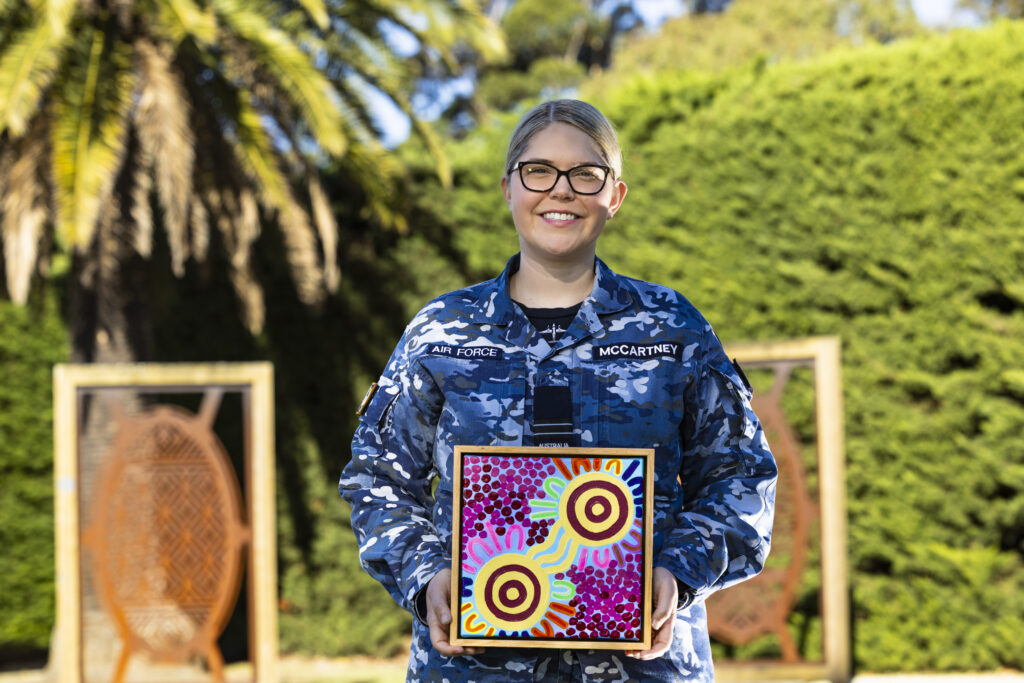
When Aimee McCartney was growing up in the northern suburbs of Melbourne her parents instilled in her a deep sense of pride in her Aboriginal ancestry. Her mother, Terrie Stewart, taught her traditional weaving methods and other cultural traditions that had been passed on through the generations for as long as time can tell.
“My mother was always my inspiration,” Aimee said. “Her weaving was passed down from my aunties and grandparents and connected me and my mother to our country and traditional practices.”
It was not only through her art that Aimee’s mother inspired her. In high school, a friend introduced her to an Army cadets’ program at Simpson Barracks. Aimee’s mother had served in the Army reserve for many years and, through that shared experience, Aimee began to find out more about her family’s deep connection to Australia’s military history.
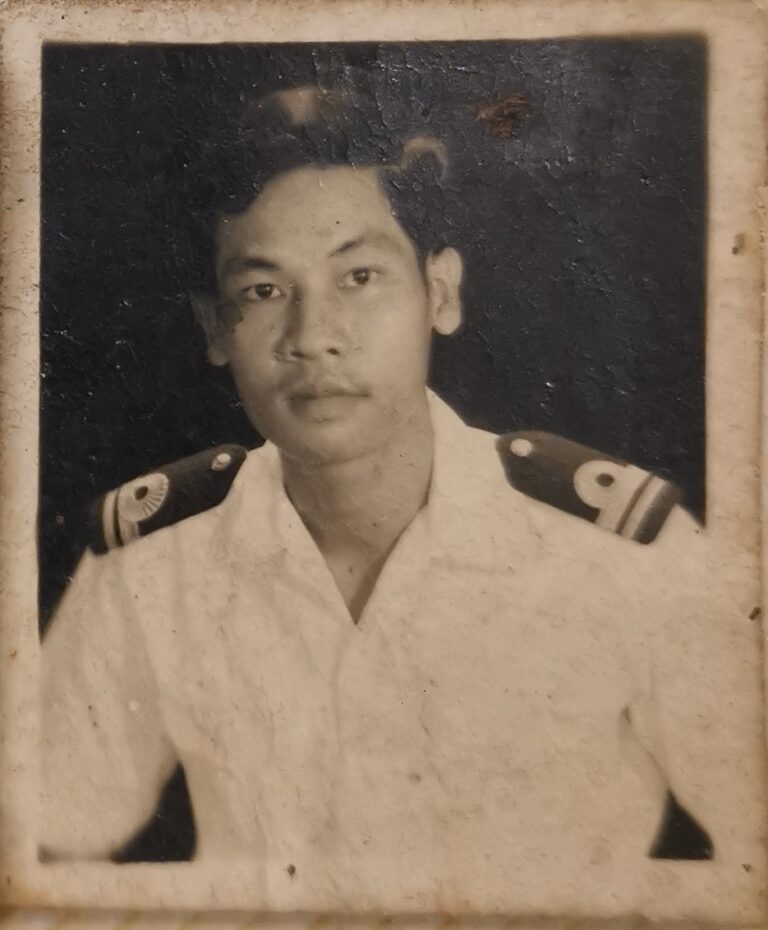
Her great great great grandfather was Alfred Jackson Coombs, an Aboriginal man who had been born in the tiny town of Antwerp in Western Victoria near Dimboola. Despite the ban on people of “Non- European decent” being allowed to enlist, he had managed to join in May 1916 as recruiters became desperate to find new recruits to replace the losses at Gallipoli.
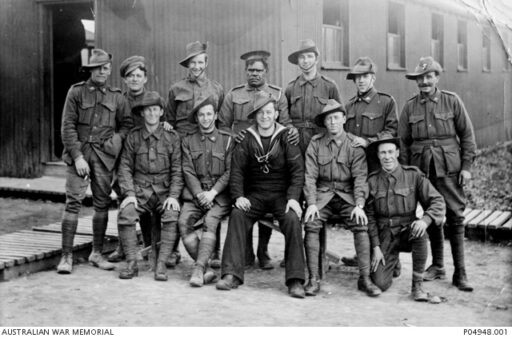
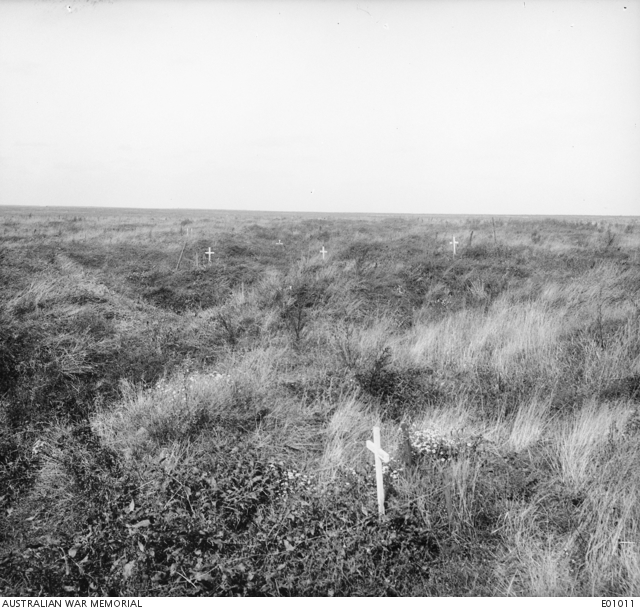
Alfred saw service on the Western Front from 1916 until he was wounded in a gas attack in September 1918 while involved in fighting at Peronne in one of Australia’s last battles in the war. According to his descendants, instead of returning to a grateful nation, he discovered the level of discrimination he faced had only increased.
“He ended up throwing away his medals,” Aimee said. “He said he didn’t want anything that identified him as a veteran because it only made him more of a target.”
The war became a subject that neither Alfred nor his brothers, who also served, ever discussed.
Despite these experiences his descendants enlisted in the Second World War and continue to be part of the defence forces to this day. In all 28 members of Aimee’s family have served including in Iraq and Afghanistan.
Aimee was in Army cadets from Year 9 until her first year of her university degree in Australian History and Archaeology at Melbourne University. She formed tight friendships with many people who went on to serve in the ADF.
Unlike her friends, Aimee’s path to the defence forces did not start on graduating from university. She initially found work with the Victorian government, including time with the Victoria Police and with the Department of Premier and Cabinet. While the work was interesting, she soon realised she wanted to do more than a desk job.
“I wanted to be part of something bigger,” Aimee said. “I wanted to do more than just sit behind a desk.”
Her friends from cadets were encouraging her to follow them into the defence forces and she heard about a role as an Indigenous Liaison officer with the RAAF.
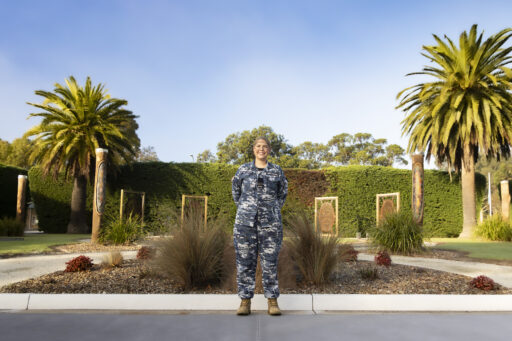
“It seemed the perfect role for me given my experience at Victoria Police and ancestral connections to the area around the base where the role was based.”
Aimee applied in early 2018 and by August was at the RAAF East Sale undertaking officer and basic military training.
“When I joined, I thought I was the first person in my family to join the RAAF, but my family said no, her great aunt Auntie Jean Williamson was a member of the WAAF (Women’s Auxiliary Australian Air Force) during the Second World War.”
When Aimee joined Jean was in her late 90’s and living in an aged care facility, but Aimee managed to arrange a tour of RAAF Base Point Cook where her aunt had been based during the Second World War.
Jean was the youngest woman serving with the WAAAF at the time. When she enlisted, she had been one of twelve children living in a two-bedroom house with her mother. She had enlisted to be part of the wider world after years helping her mother raise her siblings.
“Everything was new and exciting,” she said in an interview with the Shrine of Remembrance in 2022. “It was my first foray in the wider world.”
“Auntie Jean met her husband, who was a pilot, when she served at Point Cook and had to leave the service when they married. But she became the matriarch of the family, so it was wonderful to be able to go to Point Cook with her.”
Like Auntie Jean, the Air Force opened up a wider world to Aimee and, also like Jean, it was the place where she would meet her husband – an air traffic controller with the RAAF.
Aimee’s career in the Air Force has seen her work as an Indigenous Liaison Officer and later as a Personnel Capability Officer. The roles have offered her the opportunity to develop her career while also providing the opportunity to represent and assist Indigenous service members and more recently provide support to all service members of 32 Squadron.
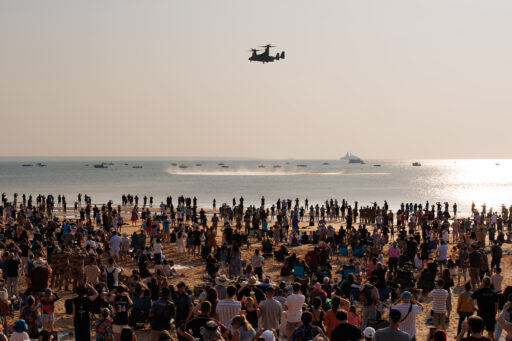
“I have done things in defence you could not do anywhere else,” Aimee said. “I took part in Exercise Talisman Sabre and Exercise Pitch Black. During Pitch Black I was an escort officer working with four and five-star generals from the Malaysian and German defence forces as their point of contact. At Talisman Sabre I was shadowing the logistics officer and was in the field working alongside the United States Army and Air Force and the New Zealand Army.”
But Aimee never forgot the traditional art that her mother introduced her to and has begun to forge a career not only as an artist but also as a businesswoman. She is currently completing a Masters degree in Indigenous Business Leadership at Monash University.
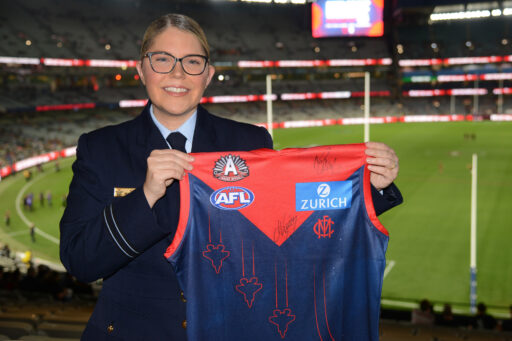
She has established an Aboriginal art business, Luruk-In, where she creates original and commissioned art, murals and homewares. In 2025 she was invited to design the Melbourne Football Club’s ANZAC Day Eve Guernsey which incorporated RAAF fighter jets performing a ceremonial flight to represent a missing comrade who died in service.
In April, a group called Arts Queen Gallery, which is based in Rome, contacted Aimee with an extraordinary offer.
“They told me they had followed my work through social media. They asked if I would be interested in exhibiting three of my paintings at an exhibition they were organising at the Carousel de Louvres which is attached to the Louvres museum in France.”
Three months later Aimee and her mother found themselves at the Louvre museum with Aimee’s paintings on exhibition.
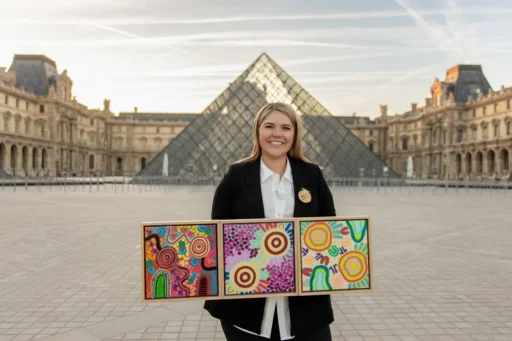
While Aimee is thriving as an artist and a service member of the RAAF, she has not lost sight of who she is and the debt she owes to the family that went before her.
“We look back on the shoulders of giants. The opportunities we have today are built on the work and sacrifices of previous generations,” Aimee said.
Aimee’s brother is currently applying to become the 29th member of her family to enlist in the Australian Defence Forces and Aimee herself is hoping to continue her career in the Air Force for many years to come.
“I hope to be in for at least the next five to ten years,” she said. “I hope to be in a position where I can influence the Indigenous affairs space and advocate for members and represent my people.”