Private John Alfred Alexander Green – First World War
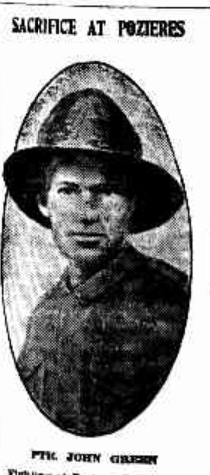
RSL Victoria remembers the sacrifice of Private John Alfred Alexander Green who gave his life in service of his country during the First World War.
John Alfred Alexander Green was born to parents John Alexander Green and Mary Jane Hagan on 8 August 1886. He was the second son born to the couple who resided on the island of Tristan, the largest and northernmost island in the Tristan da Cunha group of islands in the South Atlantic Ocean, situated about 2000 miles west of the Cape of Good Hope. John asserted he was born at Cape Town, South Africa, although his mother reported he was born on the island.
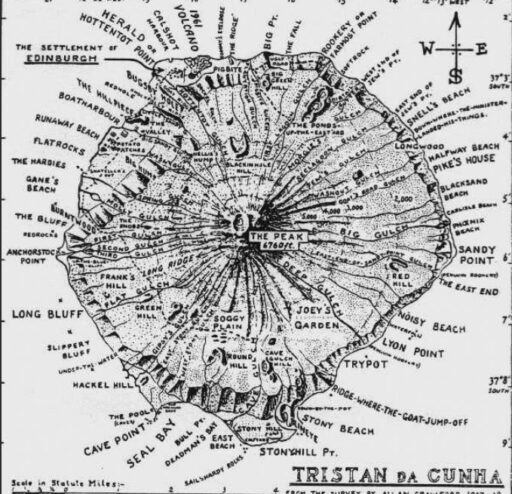
The year prior to John’s birth had been a difficult one for the residents of the isolated island. HMS Opal had brought much needed supplies from the British Government on 27 December 1884. These included a new lifeboat from the Board of Trade which was intended to be used in ‘bad weather and heavy surf’. By late 1885, the stores were gone, the potato crop had failed, there was a rat plague, and visits from ships were a rarity.
During the early morning of 28 November 1885, a fire was lit and the islanders rushed to procure items that could be traded. The iron barque, West Riding, had been spotted off the island on rough seas. 15 men set out towards the ship in the new lifeboat. The lifeboat did not return, and no clue was ever found as to the fate of the boat or the men on board. John’s father was one of the occupants.
The governor of the island was John’s great-grandfather, Peter Green, who wrote of the incident:
Next morning two parties went around the island by land. They could see nothing of the boat. She had all our best boatmen in her. If the boat and crew is lost it will make Tristan an island of widows, for it would make 13 widows. I had three sons…three grandsons, three brothers-in-law and one son-in-law on the lifeboat.
There were only four adult men remaining after the lifeboat tragedy including Peter Green and John’s grandfather Captain Andrew Hagan. The total number, inclusive of women and children, was 92. Three days before John was born, 27 residents were taken from the island to Cape Town, South Africa aboard HMS Thalia.
Shipwrecks off the coast of the island were not unknown and this was the fate of the Allanshaw on 24 March 1893 while it was enroute from Liverpool to Calcutta. The crew, led by George Herbert Cartwright, stayed on the island for three months assisting with the potato crops. It was also not unknown for members of shipwrecked crews to remain on the island which is exactly what Cartwright did. The rest of the Allanshaw crew departed aboard the German barque Theodore in June 1893. Four months later, on 4 October 1893, George Cartwright married John’s mother Mary Jane.
In October 1898, George and Mary Jane took their family of four children, including John and William, to South Africa where three more children were born. By 1903, the family was residing in the Capetown suburb of Kenilworth and George was engaged in marine surveying. The Cartwright family emigrated to Australia aboard the Aberdeen Line steamer Marathon and arrived in Melbourne with five children in July 1908.
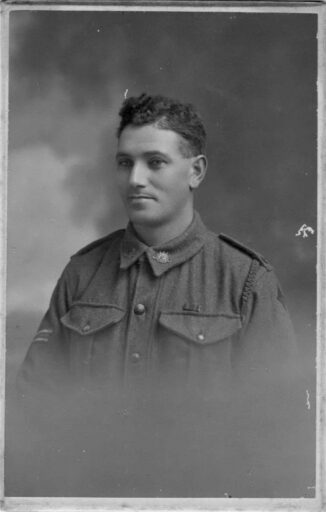
John and William also came to Australia although it doesn’t appear that they accompanied the Cartwrights. John was almost 22 years old at this time, and was in Bunbury, Western Australia during 1909. His mother later reported that he spent many years at sea before the First World War.
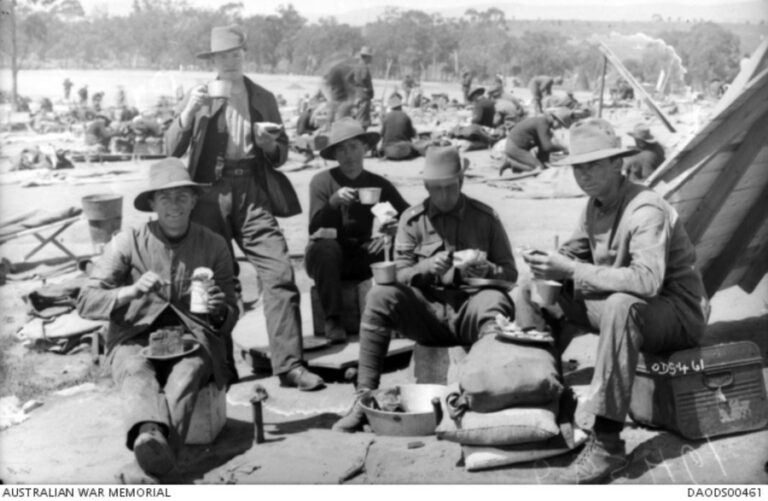
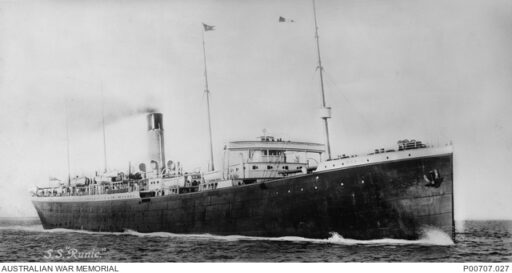
John enlisted as ‘John Green’ in the Australian Imperial Force in Melbourne on 22 December 1914. Two days before he sailed, John’s brother, William, enlisted at Liverpool, Sydney. John departed Melbourne aboard HMAT Runic (A54) with the 3rd reinforcements of the 6th Battalion on 25 February 1915.
The record of John’s service shows that he joined the 6th Battalion at Cape Helles on 16 May 1915 and remained with the battalion through to September. During the night of 20-21 May 1915, the battalion was involved in standing to arms in anticipation of a night attack before moving to the reserve lines at the end of May. The battalion returned to the trenches around 18 July and into an area that was heavily shelled with 20 men killed and 64 wounded before the end of July. During the August Offensive on 6-7 August 1915, the battalion was involved in operations to attack German Officers Trench and the capture and destruction of Sniper’s Trench and nearby communications trenches. The operation resulted in 17 killed, 66 wounded, 62 missing and 1 dying of wounds afterwards.
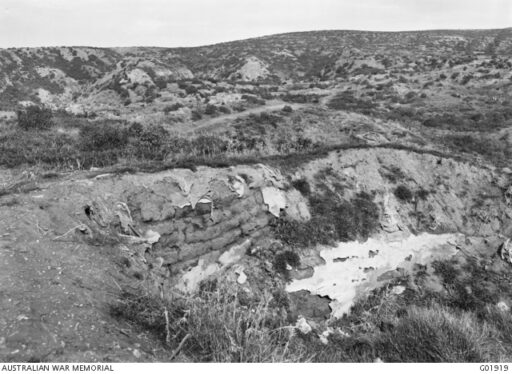
John moved from Gallipoli to Mudros on 4 September 1915 when he was admitted to hospital. He rejoined the battalion at Lemnos on 9 October where they remained until 13 November. During this time the battalion’s unit war diary reports ‘sports were encouraged and matches arranged with other units and the Navy.’ The battalion moved back to Anzac on 14 November until the evacuation in December.
During March 1916, John spent some more time in hospital at Serapeum before being transferred to the 46th Battalion on 7 April 1916. He proceeded to Alexandria with this unit on 1 June 1916 and embarked for Marseilles aboard Kinfauns Castle before disembarking at their destination on 8 June. The battalion then boarded a train at 10pm and travelled to Ballieul where they engaged in training activities for the remainder of the month. John returned to hospital during July suffering from bronchitis.
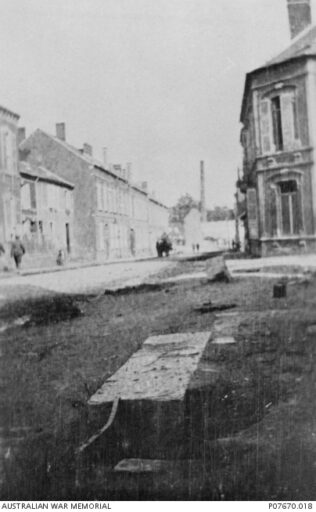
John was with the 46th Battalion at Albert on 29 August 1916 when very heavy rain set in and continued for several days. The unit war diary reports that the trenches were filled with mud to waist height and provided no protection from extremely active enemy fire during the period 29-31 August 1916. According to the unit war diary, one company of the battalion assisted in the operation at Mouquet Farm on the night of 29/30 August 1916 by ‘forming a defensive right flank to the attack’.
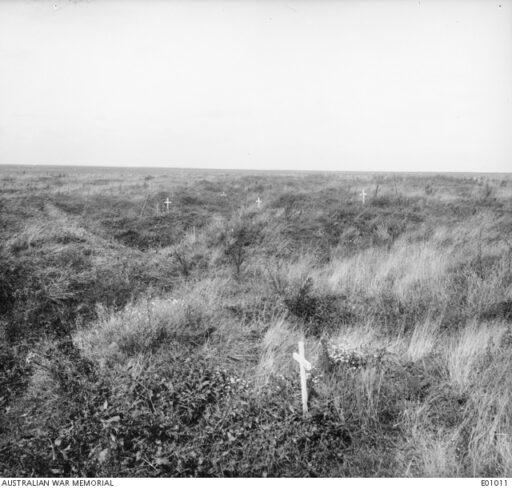
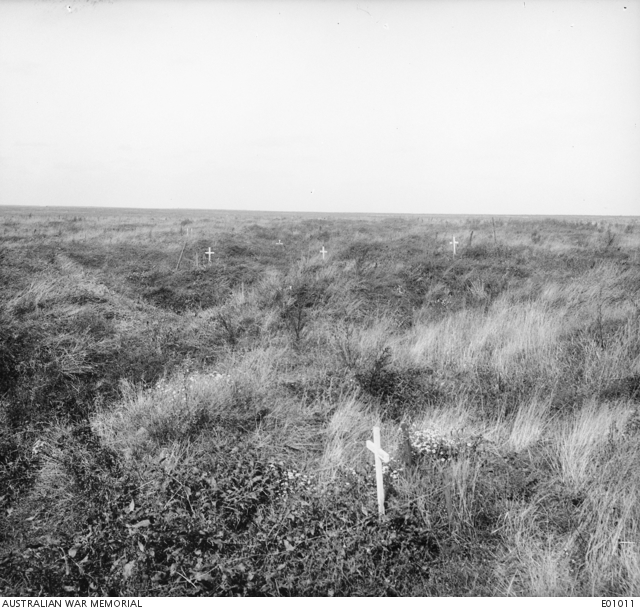
John was 30 years old when he was killed in action on 30 August 1916. He is commemorated on the Villers-Bretonneaux Memorial at Villers-Bretonneaux, France.
RSL Victoria pays tribute to Private John Alfred Alexander Green, his family and all those who have sacrificed in the service of their country.
Lest we forget.